
Spokane Indian Law Conference Agenda
Here are the materials in United States v. Washington, subproceeding 24-01 (W.D. Wash.):
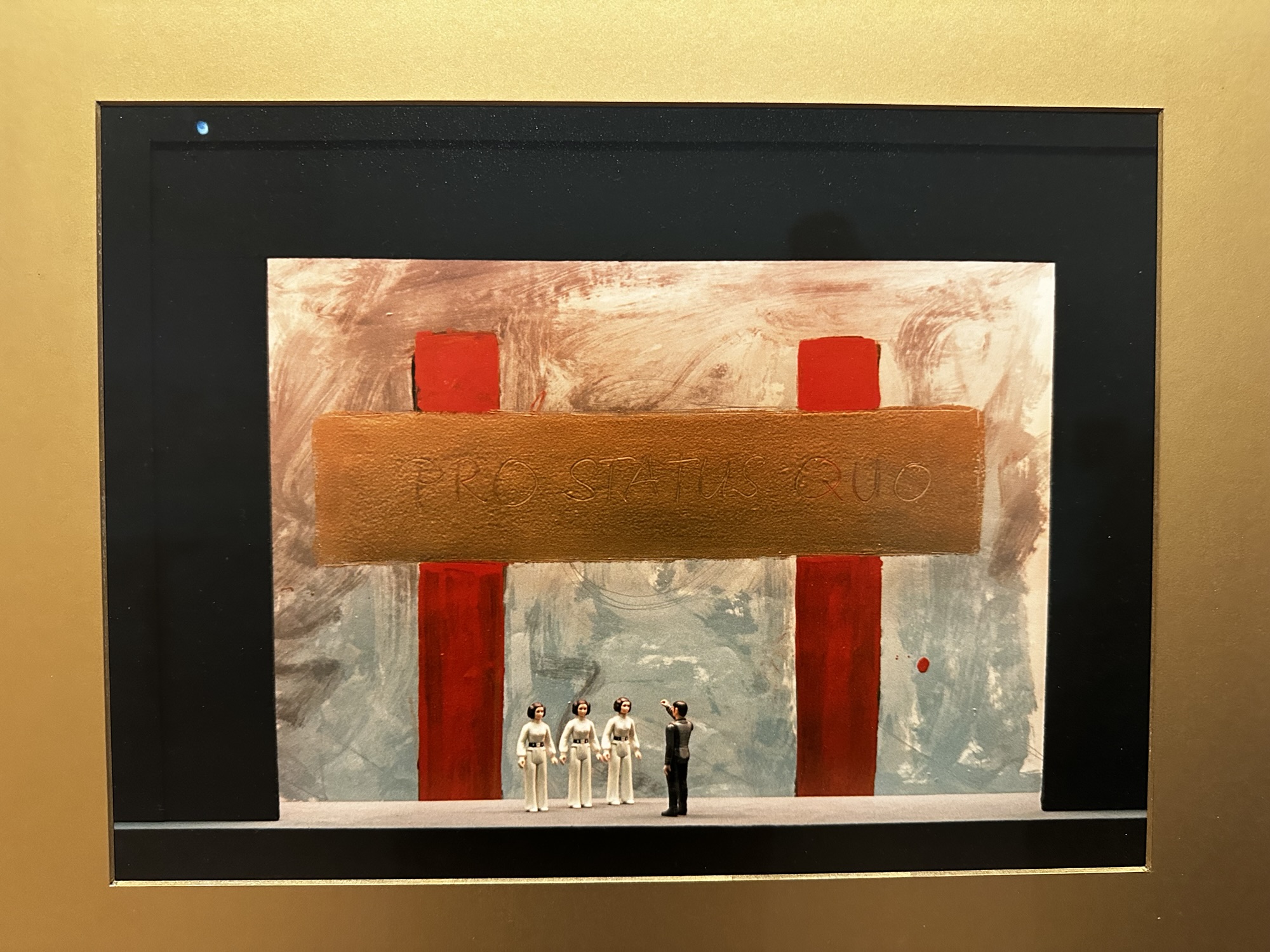
Here are new materials in Santee Sioux Nation v. Tso (D. Neb.):

Prior post here.
Here are the materials in Cow Creek Band of Umpqua Tribe of Indians v. Dept. of the Interior (D.D.C.):
28 Motion to Disqualify Jenner
40-1 Coquille Opposition to Motion to Disqualify Jenner
51 Federal Opposition to TRO Motion
52 Coquille Opposition to TRO Motion
Jan. 22, 2025: MINUTE ORDER. For the reasons stated on the record at the hearing held on this date, (1) Plaintiffs’ 28 Motion to Disqualify Keither Harper and Jenner & Block is denied; (2) Coquille’s 15 Motion to Intervene and 33 Renewed Motion to Intervene are granted; (3) Coquille’s 15 Motion to Expedite is denied as moot; and (4) the parties’ 40 , 41 motions to seal are denied and the Clerk of Court shall unseal those docket entries. Further, by January 24, 2025, Plaintiffs shall file all materials submitted for in camera review on the public docket. Signed by Judge Amit P. Mehta on 1/22/2025. (lcapm3) (Entered: 01/22/2025)

The Indigenous Law & Policy Center at MSU College of Law has a new graduate assistant, Angie Sanchez, and is able to resume posting weekly job announcements. If you have a job announcement, please share it with us and we’ll post it here on Thursdays. Please share your job announcement by uploading the information requested on this Google Form. If you have any questions, please email the MSU College of Law Indigenous Law & Policy Center at indigenous@law.msu.edu.

Featured Events:
Welcome Protocol
Forum Hall 1:00-1:30 PM
Panel 1 The Past and Future of Indigenous Politics
with Bryan Newland and Jeff Irwin,
Forum Hall 1:30 – 3:00 PM
Panel 2: Lawyering Tribal Self-Determination
with Wenona T. Singel, Doreen Nanibaa McPaul, and Mitchell Forbes,
Forum Hall 3:15 – 4:45 PM
Dinner for symposium participants.
Great Lakes Room 5:00 – 6:30 PM
Great Lakes Room 7:00 – 9:30 PM
An Evening with Mark Trahant,
The 2025 Robert F. Berkhofer Jr. lecture on Native American Studies
Followed by reception
Guest Arrival,
Anderson ABCD 8:00 – 9:00 AM
Breakfast
Anderson ABCD 9:00 – 10:00 AM
Panel 3: Indigenous Judging in Tribal and State Courts
with Gregory H. Bigler and Allie Greenleaf Maldonado,
Anderson ABCD 10:00 – 11:30 AM
Lunch
Anderson ABCD 11:30 AM – 12:30 PM
Keynote Address by Justice Raquel Montoya-Lewis,
Pendleton Room 12:30 – 1:45 PM
Panel 4: International Indigenous Leadership
with Kyle Powys Whyte, Kristen Carpenter, and Mark Trahant
Pendleton Room 2:00 – 3:30 PM
The Next 25: The Self-Determination Era and the Future of Indian Affairs
A symposium on the 50th anniversary of the Indian Self-Determination and Education Assistance Act
Our symposium is inspired by the 50th anniversary of the Indian Self-Determination and Education Assistance Act of 1975, the cornerstone statute establishing the tribal self-determination era. The first quarter century of the self-determination era featured many great successes but mostly great frustrations often caused by federal reluctance to empower tribal nations. The second quarter century featured the rise of tribal political and economic power, but many of the same frustrations, this time more often caused by judicial decisions. As always, Indigenous leaders look to both the past and the future in consequential decisions for their nations. This symposium brings together many of today’s most influential Indigenous leaders to assess the last fifty years and imagine what the next quarter century brings. Panelists include Indigenous elected officials, judges, and lawyers at the federal, state, and Tribal levels.
Washington Supreme Court Justice Raquel Montoya-Lewis, a citizen of the Pueblo of Isleta and a descendant of the Pueblo of Laguna, will deliver a keynote address on Saturday.
Here.
Abstract:
For too long, tribal judiciaries have been an afterthought in the story of tribal self-determination. Until the last half-century, many tribal nations relied on federally administered courts or had no court systems at all. As tribal nations continue to develop their law-enforcement and police powers, tribal justice systems now play a critical role in tribal self-determination. But because tribal codes and constitutions tend to borrow extensively from federal and state law, tribal judges find themselves forced to apply and enforce laws that are poor cultural fits for Indian communities—an unfortunate reality that hampers tribal judges’ ability to regulate and improve tribal governance.
Even where tribal legislatures leave room for tribal judges to apply tribal customary law, the results are haphazard at best. This Article surveys a sample of tribal-court decisions that have used customary law to regulate tribal governance. Tribal judges have interpreted customary law when it is expressly incorporated into tribal positive law, they have looked to customary law to provide substantive rules of decision, and they have relied on customary law as an interpretive tool. Reliance on customary law is ascendant, but still rare, in tribal courts.
Recognizing that Indian country will continue to rely on borrowed laws, and aiming to empower tribal courts to advance tribal governance, this Article proposes that tribal judges adopt an Indigenous canon of construction of tribal laws. Elevating a thirty-year-old taxonomy first articulated by Chief Justice Irvin in Stepetin v. Nisqually Indian Community, this Article recommends that tribal judges seek out and apply tribal customary law in cases where (1) the relevant doctrine arose in federal or state statutes or common law; (2) the tribal nation has not explicitly adopted federal or state law on a given issue in writing; (3) written tribal law was adopted or shifted as a result of the colonizer’s pressure and interests; and (4) tribal custom is inconsistent with the written tribal law, most especially if the law violates the relational philosophies of that tribal nation. Tribal judiciaries experienced at applying tribal customary law will be better positioned to do justice in Indian country.


 Turtle Talk
You must be logged in to post a comment.