Please see the strongly worded, if misguided, commentary from Judge Leon in Solonex v. Haaland, who sees 40 years of delay on a drilling permit and calls it “Kafkaesque.”It’s hard to disagree with that sentiment — though I wish the court were more understanding that tribal and Indian efforts tostop the drilling proposal began when there were virtually no legal protections for tribes and Native citizens to utilize.It’s time to acknowledge that this drilling should never have been approved over tribal and Indian objections and the RESPECT Act takes us a long way down the road to preventing this B.S. from happening over and over again.
Here is the order in Solonex LLC v. Haaland (D.D.C.):
Since the first Indian law classes were offered in the late 1960s and early 1970s, law teachers mostly have considered the field a niche specialty, even a backwater, unnecessary to anyone not likely to go into law practice in Indian country. In those days, law teachers focused on treaty rights fights. Treaty rights are a critical but small part of Indian country practice. Lawyers in modern day Indian country handle virtually every kind of matter taught in law schools in addition to the Indian law-specific subject matters. Beginning in the 1990s, American Indian tribal nations started to become critical factors in governmental and economic activity throughout much of the United States. In the 21st century, many law schools offer Indian law — and occasionally offer additional, specialized courses — but generally are still far behind the curve. Worse, when it is offered, the Indian law canon tends to be taught in ways that ignore contemporary tribal agency by emphasizing historical events over modern issues. Modern tribal nations make their own laws. Here I give examples of tribal court cases and tribal statutes law teachers can use to incorporate Indian law into virtually any common law course.
Public health measures to combat COVID-19, especially in the first year before vaccines became widely available, required individuals to be able to access fresh water while remaining isolated from most of their fellow human beings. For the approximately 500,000 households in the United States and over two million Americans who lacked access to reliable indoor running water, these COVID-19 measures presented a considerable added challenge on top of the existing risks to their health from an insecure water supply.
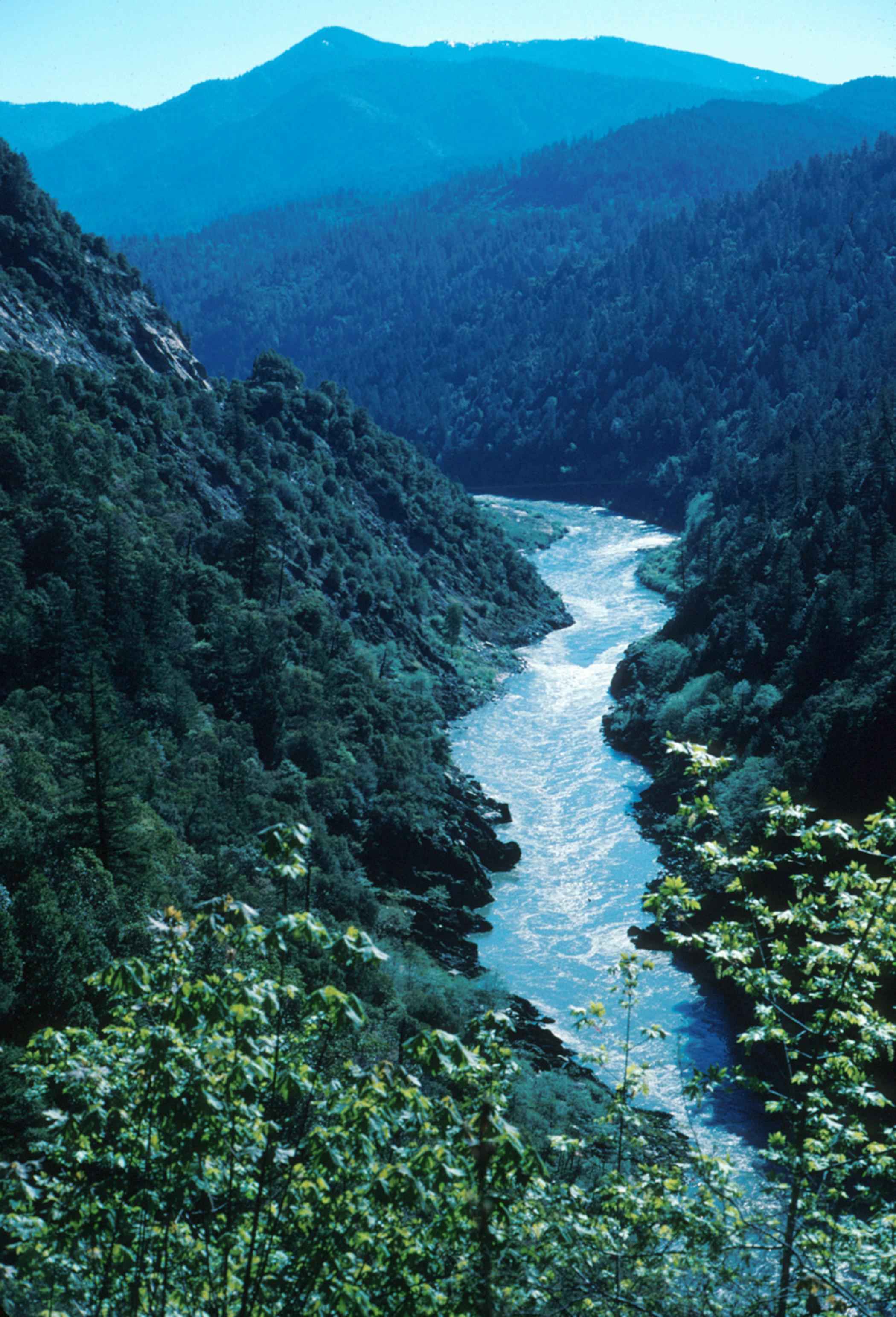
Many of these people were Native Americans, whose Tribes often lack fully adjudicated, quantified, and deliverable rights to fresh water. To highlight the critical role that water rights played in Tribes’ capacities to cope with the pandemic, this essay compares the Klamath Tribes in Oregon, who after 40 years of litigation have fairly securely established themselves as the senior water rights holders in the Klamath River Basin, to the Diné (Navajo Nation), whose reservation—the largest in the United States—covers well over 27,500 square miles of Arizona, Utah, and New Mexico but largely lacks quantified water rights or the means to deliver water to households. While access to water was not the sole factor in these two Tribes’ vastly different experiences with COVID-19, it was an important one, underscoring the need for states and the federal government to stop procrastinating in actualizing the water rights for Tribes that have been legally recognized since 1908.
This Article is the first of a two-part investigation into the Indian law doctrine of reservation diminishment/disestablishment, examining Supreme Court decisions in this area in light of insights gathered from the collected papers of individual Justices archived at the Library of Congress and various university libraries. The Article first addresses Seymour v. Superintendent (1962) and Mattz v. Arnett (1973), observing that these first two diminishment/disestablishment cases are modern applications of basic, longstanding principles of Indian law which are highly protective of Indigenous people’s rights and tribal sovereignty. The Article then examines in detail DeCoteau v. District County Court, the anomalous 1975 decision in which the Supreme Court held that an 1889 land-sale agreement between the United States and the Sisseton-Wahpeton Dakota Indians, which Congress ratified in 1891, had abolished the boundaries of the Lake Traverse Reservation in South Dakota and North Dakota, a reservation that had been established as the Indians’ “permanent reservation” home in an 1867 treaty. The Article critiques DeCoteau in view of the historical context of the 1862 U.S.-Dakota War, an explosive conflict that resulted in the forced removal of the Dakota people from their reservation and aboriginal homelands in Minnesota and the abrogation of all U.S.-Dakota treaties, including treaty rights that guaranteed annual payments essential for the Indians’ subsistence and survival. The Article brings into view the full scope of the negotiations between the Sisseton- Wahpeton people and U.S. commissioners in 1889, demonstrating that the Dakota people never consented to any reduction or elimination of reservation boundaries when they agreed, under desperate circumstances, to sell to the United States the unallotted lands within the reservation. The Article further surveys additional evidence, unaddressed by the Supreme Court, regarding the 1891 Act’s legislative history, including numerous congressional debates and provisions of reports of the Senate and House of Representatives, as well as evidence from Executive Branch sources, which collectively show that the 1891 Act did not shrink or terminate the reservation. The Article posits that DeCoteau, which scholars recognize as having initiated a “magic language” mode of analysis in the reservation diminishment/disestablishment area, cannot be reconciled with fundamental principles of Indian law. Finally, the Article inspects and discusses documents from the archived papers of the Justices who took part in DeCoteau, unraveling clues that may help account for the Supreme Court’s aberrant decision.




 Turtle Talk
You must be logged in to post a comment.