Here is the complaint in Save the Valley LLC v. Santa Ynez Band of Chumash Indians (C.D. Cal.):
Author: Matthew L.M. Fletcher
Native American Telecom (Crow Creek Sioux) Contract Breach Claims against Sprint Allowed to Proceed
Here are the materials in Sprint Communications Company L.P. v. Crow Creek Sioux Tribal Court (D. S.D.):
190 Native American Telecom Opposition
We have posted on this case before:
- on tribal court jurisdiction in 2010
- on the denial of an injunction against Sprint in 2011
- A related case against the tribal court again
Federal Court Confirms Labor Union Arbitration Award against Picayune Rancheria Casino
Here are the materials in Unite Here Local 19 v. Picayune Rancheria of Chukchansi Indians (E.D. Cal.):
11-1 Unite Here Motion for Judgment on the Pleadings
An excerpt:
Respondents maintain that the Labor Management Relations Act (“LMRA”) does not apply to them because the statute does not expressly abrogate tribal sovereignty. This Court, however, need not determine whether the statute abrogates sovereignty, as Respondents have waived their sovereign immunity and consented to be sued in federal court. See Okla.Tax Comm’n v. Citizen Band Potawatomi Indian Tribe of Okla., 498 U.S. 505, 509 (1991) (“Suits against Indian tribes are thus barred by sovereign immunity absent a clear waiver by the tribe or congressional abrogation.”) (emphasis added). The CBA-which, again, Respondents concede they agreed to—provides:
For the sole purpose of enabling a suit to compel arbitration or to confirm an arbitration award under this Agreement or the Employer’s Tribal Labor Relations Ordinance, the Employer agrees to a limited waiver of sovereign immunity and consents to be sued in federal court, without exhausting tribal remedies.Pet., Exh. A at 17 (emphasis added). There is no indication that Respondents entered into this unequivocal waiver involuntarily. See White v. Univ. of Cal., 765 F.3d 1010, 1025–26 (9th Cir.2014) (“A voluntary waiver by a tribe must be unequivocally expressed.”) (internal quotation marks omitted).
Contrary to Respondents’ suggestion, the United States Supreme Court’s recent decision in Michigan v. Bay Mills Indian Community, 134 S.Ct. 2024 (2014), does not compel a different result. In fact, that opinion reconfirmed that an Indian tribe may waive its sovereign immunity: “we have time and again treated the doctrine of tribal immunity as settled law and dismissed any suit against a tribe absent congressional authorization or a waiver.” 134 S.Ct. 2030–31 (internal quotation marks, brackets, and parentheses omitted); see also id. at 2035 (“[I]f a State really wants to sue a tribe for gaming outside Indian lands, the State need only bargain for a waiver of immunity.”).
SCOTUS Denies Cert in CashCall v. Inetianbor
National Native American Bar Association Study Released
|
Michigan NALSA Event on Keystone XL Pipeline
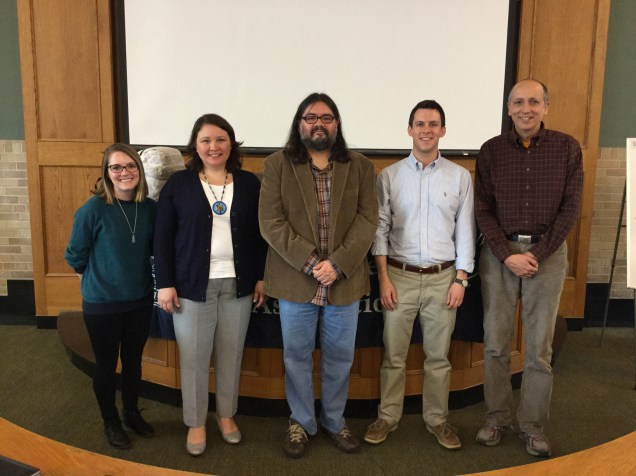
Colin Kavanaugh

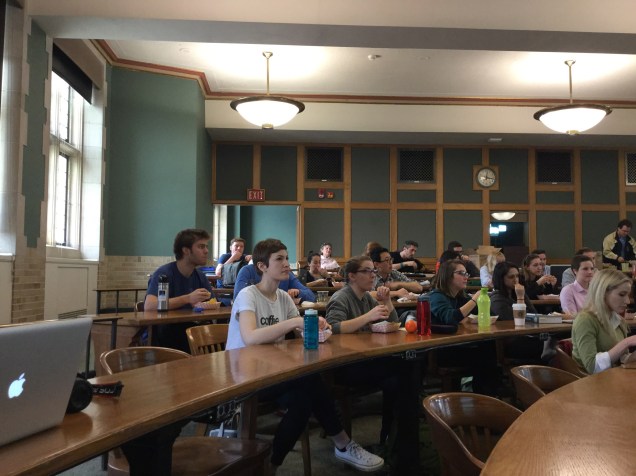
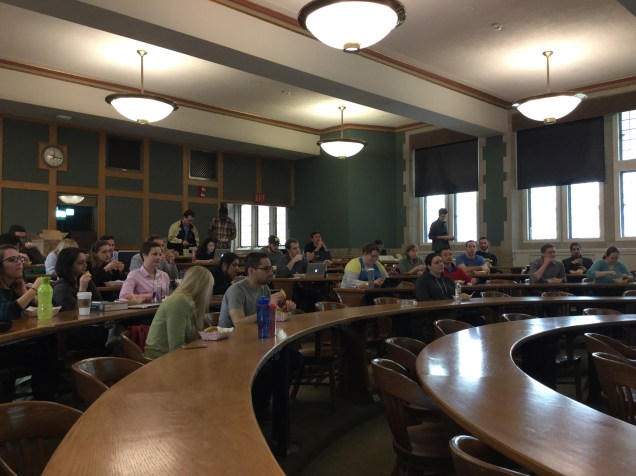
The Michigan law school community
Leah Jurss on Creative Remedies for Tribes Extending Civil Infraction Systems over Non-Indians
Our own Leah Jurss (MSU Law ’15, MSU Law Review EIC, White Earth Ojibwe) has published “Halting the Slide Down the Sovereignty Slope: Creative Remedies for Tribes Extending Civil Infraction Systems over Non-Indians” in the Rutgers Race and The Law Review.
An excerpt:
The best option for tribes is to work towards building open communications with non-Indians residing on reservations, non-Indians visiting reservations, and state and local governments surrounding reservations. These communications can help to build trust between all parties and a base of empirical evidence showing the effectiveness of tribal civil infraction systems. It is imperative that tribal jurisdiction over non-Indians not be reduced any more than it currently is to ensure the continuing success and viability of tribal nations themselves. A tribal nation that does not have the ability to protect itself from harmful outside influences via its tribal courts has little ability to ensure the safety and security of its citizens, a priority of all sovereign nations.
Materials in Wrongful Death Action against Mississippi Choctaw
Here are the briefs in Payne v. Mississippi Band of Choctaw Indians (S.D. Miss.):
News coverage here.
Hopi Tribe Trust Breach Claim re: Safe Drinking Water Fails in Federal Circuit
Here is the opinion in Hopi Tribe v. United States.
An excerpt:
The Hopi Tribe filed suit against the United States in the Court of Federal Claims seeking damages to cover the cost of providing safe drinking water on the Hopi Reservation. In order to invoke the trial court’s jurisdiction, the Hopi Tribe must identify a statute or regulation imposing a specific obligation on the United States to provide adequate drinking water that would give rise to a claim for money damages. Because the Court of Federal Claims properly concluded that the Hopi Tribe failed to identify any source for a money-mandating obligation, we affirm
Briefs:
Lower court materials here.
 Turtle Talk
You must be logged in to post a comment.