Here:
Amicus Brief of Oklahoma in support of Petititoner
Amicus Brief of Alabama, et al., in support of Petitioner — 16 states
Shannon Rogers has published “Comment: Giving Meaning to Empty Words: Promoting Tribal Self-Governance by Narrowing the Scope of Jury Vicinage and Venue Selection in MCA Adjudications” in the Wyoming Law Review.
An excerpt:
A practical step to solving the federal-tribal disconnect and involving the Indian community is to narrow the MCA adjudication procedures. As discussed below, the MCA, unlike any other criminal statute, explicitly draws geographic and racial-political boundaries. The adjudication process, through venue and jury venire selection reform, needs to be limited in consideration of the MCA’s constraints. This comment discusses two proposals for modifying MCA adjudications to better involve the Indian community: (1) moving the venue for MCA adjudications closer to the Indian community, and (2) shrinking the jury venire used. To exemplify these proposals, the discussion herein focuses on Wyoming because the state geography, proximity of the federal courts to the reservation, and tribal population provide a perfect case study for general issues faced in MCA prosecutions. The ultimate intent of this comment is to highlight the practical implications of ignoring venue problems and the over-inclusion of non-Indians in MCA adjudications. In doing so, the proposals presented in this comment will help further the federal government’s policy of self-governance for tribes.
Here is the complaint in G2 v. Ponca Tribe of Indians of Oklahoma (W.D. Okla.):
An excerpt:
5. On March 1, 2010, the Ponca Tribe executed a “Construction Loan” in favor of G2 in the principal amount of $750,000.00, with a rider that all construction should be performed at cost plus 10%.
6. G2 performed all of its obligations under the Construction Loan contract.7. The Ponca Tribe had been substantially performing on this Construction Loan by making payments to G2 in the amount of $35,000.00 per month. See attached Exhibit 2.8. Despite G2’s notice of default and demand for repayment, the Ponca Tribe has defaulted on repayment pursuant to the terms of the Construction Loan. Said failure constitutes an event of default pursuant to the Construction Loan. The Ponca Tribe breached its contract with G2 by failing to make payments on the principal balance, and failing to otherwise cure the default.9. G2 has sustained damages in connection with the Ponca Tribe’s breach of contract.10. G2 has sustained damages and costs in connection with the Ponca Tribe’s continued use of its tax license, incurring fees and monies owed (OTC Case No. P-13-037-K).
11. G2 is entitled to recover damages it has sustained, including repayment of the remaining principal balance of $350,000.00, interest which continues to accrue, plus the expenses related to filing this action and reasonable attorneys’ fees.
Here.
An excerpt:
Because of the successful 2013 Reauthorization of the Violence Against Women Act, which President Obama signed into law on March 7, 2013, tribal courts and law enforcement will soon be able to exercise the sovereign power to investigate, prosecute, convict, and sentence those who commit acts of domestic violence or dating violence or violate certain protection orders in Indian country, regardless of the defendant’s Indian or non-Indian status. The tribal provisions of this landmark legislation were originally proposed by the Department of Justice in 2011 to address alarming rates of violence against native women. We believe today, as we did then, that this is not only constitutionally sound law, but it is also a moral prerogative and an essential tool to ensure that non-Indian men who assault Indian women are held accountable for their crimes.

And diibishka to Emily, who helped Emmett find the first base dinner plate.

Lots of exciting kickball action.

Blue team won! Well…not really.

Here.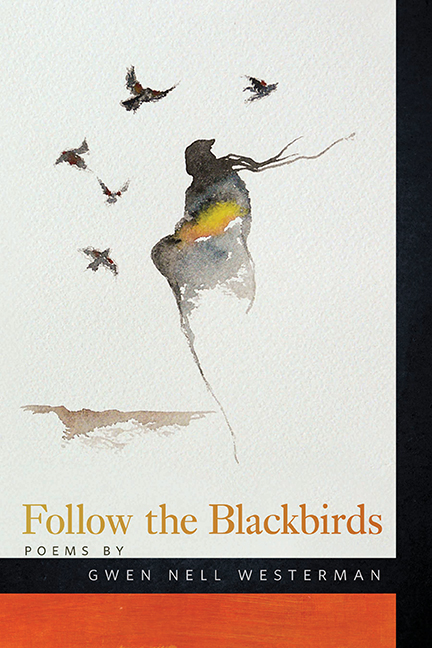 Gwen is a brilliant writer and thinker, and one of my favorite people. Buy her book.
Blurb:
In language as perceptive as it is poignant, poet Gwen Nell Westerman builds a world in words that reflects the past, present, and future of the Dakota people. An intricate balance between the singularity of personal experience and the unity of collective longing, Follow the Blackbirds speaks to the affection and appreciation a contemporary poet feels for her family, community, and environment. With touches of humor and the occasional sharp cultural criticism, the voice that emerges from these poems is that of a Dakota woman rooted in her world and her words. In this moving collection, Westerman reflects on history and family from a unique perspective, one that connects the painful past and the hard-fought future of her Dakota homeland. Grounded in vivid story and memory, Westerman draws on both English and the Dakota language to celebrate the long journey along sunflower-lined highways of the tallgrass prairies of the Great Plains that returns her to a place filled with “more than history.” An intense homage to the power of place, this book tells a masterful story of cultural survival and the power of language.
The court has issued an opinion in California Valley Miwok Tribe v. Salazar (D. D.C.):
From the order:
This matter is before the Court on Intervenor-Defendant’s motion to dismiss for lack of subject-matter jurisdiction, Fed. R. Civ. P. 12(b)(1), and for failure to state a claim, Fed. R. Civ. P. 12(b)(6). See Motion to Dismiss Plaintiffs’ First Amended Complaint for Declaratory and Injunctive Relief (“Mot.”), Dkt. No. 58, at 2 (Mar. 26, 2012). Intervenor-Defendant also argues that it is a required party but that its joinder is precluded by sovereign immunity, id. at 21; for clarity the Court will construe this argument as a motion to join a required party under Federal Rule of Civil Procedure 19(a)(2). Because the Court agrees that Intervenor-Defendant is a required party but not that its joinder is precluded by sovereign immunity, the motion to join a required party is GRANTED. Because the Court finds Intervenor-Defendant’s remaining arguments to be largely — but not entirely — without merit, the motion to dismiss is GRANTED in part and DENIED in part.
Materials are here.
Update — additional materials:
2013 09 20 Motion for Reconsideration
Here.
An excerpt:
A prominent online lender that has increasingly run into state challenges — Western Sky Financial, owned by a tribal member of the Cheyenne River Sioux — has just announced that it will stop financing loans next month.


You must be logged in to post a comment.