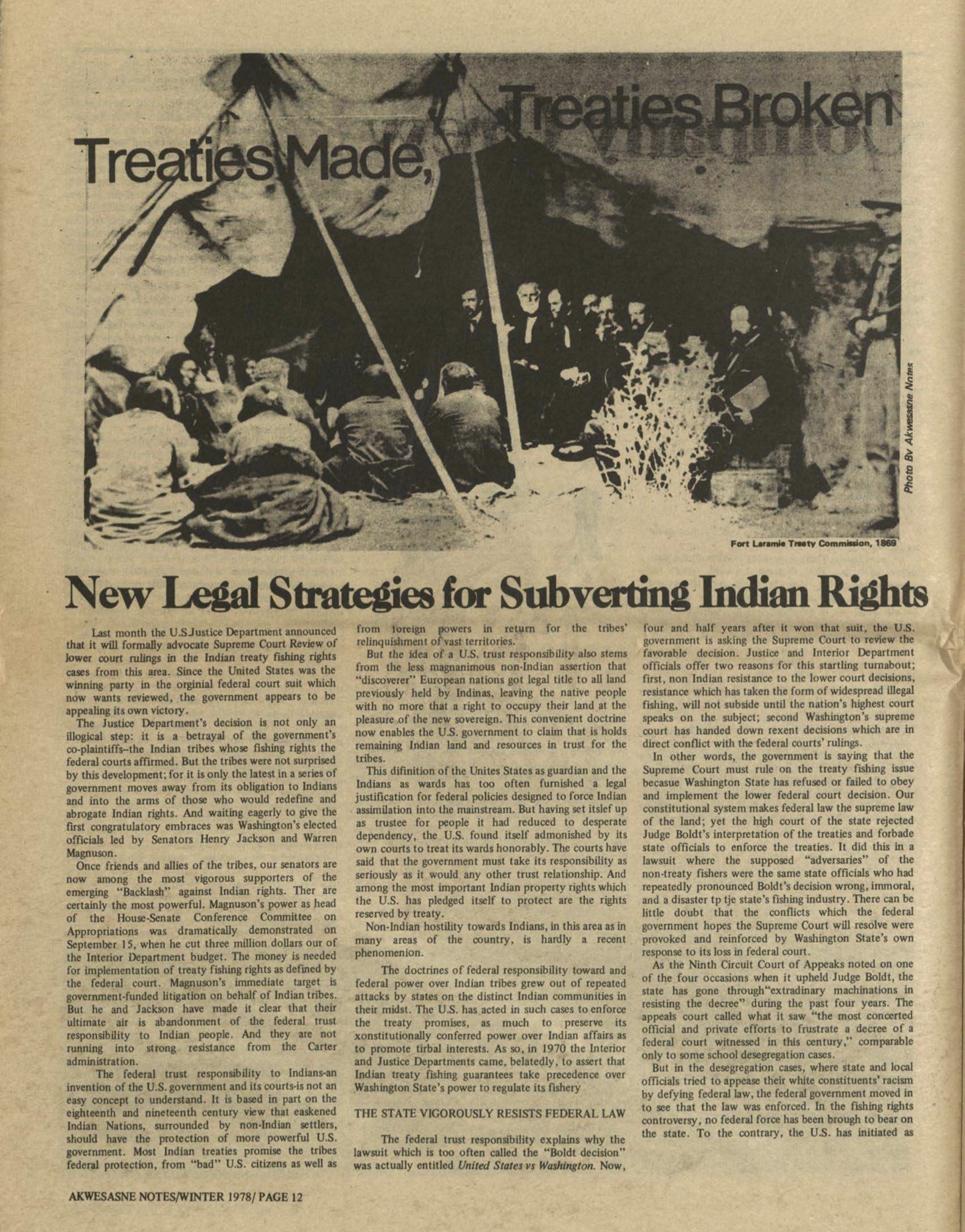
Treaty Waters At Risk: Happening Now

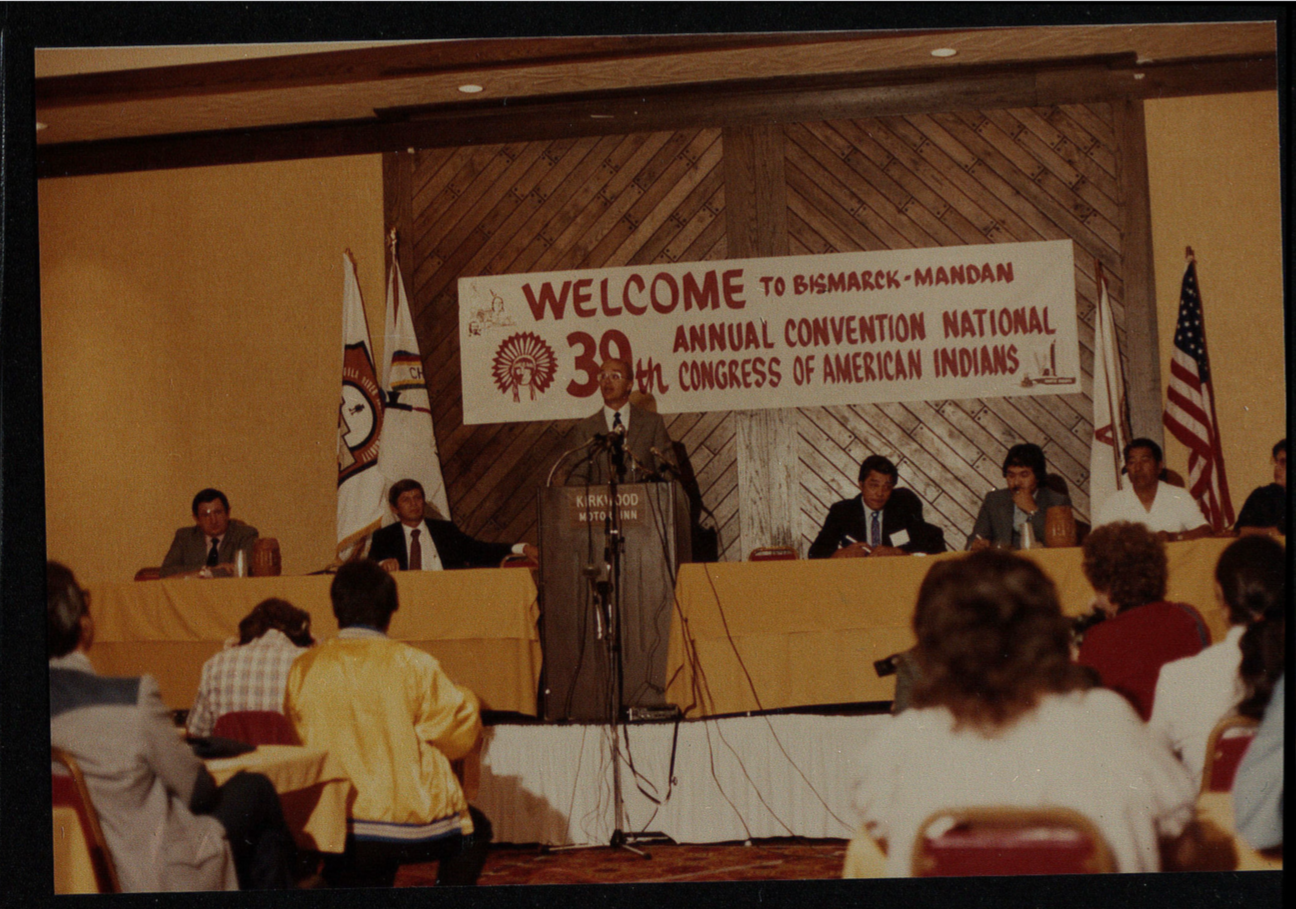
President Whitney Gravelle, Bay Mills Indian Community delivering her keynote address “The Battle of the Black Snake: Line 5 and Tribal Treaty Rights” at the Treaty Waters At Risk: Tribal Sovereignty and the Line 5 Challenge in the Great Lakes conference. Held at the MSU College of Law’s Castle Board Room, East Lansing, MI. Several panelists today offering a wealth of information. There’s still time left to join us for the afternoon panels!

Ninth Circuit Materials in Maloney v. Office of Navajo and Hopi Relocation

Briefs:

Oral argument video here.

Winnemucca Indian Colony v. United States Cert Petition

Here:

Questions presented:

(1) Is the United States’ promise to provide the Winnemucca Indian Colony, a federally recognized Tribe with lands held in trust established by an Executive Order and a separate legislative act, coupled with the government’s nearly exclusive statutory and regulatory control over the water on Indian lands, sufficient to entitle an Indian tribe to money damages when the United States breaches its fiduciary duty to protect the natural resources on those Indian lands?

(2) Did the Federal Court of Appeals, Federal Circuit, err when it affirmed dismissal of the Winnemucca Indian Colony’s third claim for relief – Breach of Trust – Water?

(3) Can the Winnemucca Indian Colony state a cognizable claim for breach of trust against the United States in relation to BIA failure to prevent trespass and theft of natural resources by third parties, under the Winters doctrine and 25 C.F.R. § 152.22?

Lower court materials here.

Guest Post by Keith Richotte: Indian Law Supreme Court Database

Hello fellow Turtle Talk Readers!

For those who I haven’t yet met, my name is Keith Richotte and I am the Director of the Indigenous Peoples Law and Policy Program at the University of Arizona School of Law.

More importantly, I would like to introduce you to a new website that will hopefully be of interest to you and your network: The Supreme Court Indian Law Database. Recently launched, this resource offers a number of important features.

  • The pages for each individual case identifies the other cases on the list that it cites and the cases where it has been cited. For example, Cherokee Nation v. Georgia cites three cases and has been cited forty-eight times

In the future, we intend on adding additional search functions to the list. Thus, hopefully before long a researcher will be able to easily identify cases decided between a certain date range, or cases that fall under the same four categories, or find out which three justices participated in the same cases or any combination of all three of these things and more.

In addition, there is room for debate for what counts as an Indian law case or for which category a particular case belongs. While acknowledging this certain subjectivity, quite a bit of thought and care went into curating the list. If you have questions about the list or would like to know how we came up with it I invite you to visit the methodology page.

Finally, while a lot of thought and care has been put into the list and the website, it is still very new and there is always room for improvement. To that end, if you have any constructive feedback you would like to share my email address is at the bottom of the main page.

I am so happy to be able to share this research with you. I, along with a small team (who you will eventually get to meet once we get our “contributor” page running), have been working diligently on this website for the past two years. It is free and available to the public and will be so as long as I have any say about it. My hope is that it will be a valuable resource for practitioners, scholars, students, tribal nations and peoples, and anyone else with an interest in Native America and a desire to see Indigenous peoples thrive. Thank you and happy searching on SCILDB.com!

Corrales Sues Yet Again for Attorney Fees

Here is the complaint styled as Corrales v. United States II (S.D. Cal.):

Commentary on the Final Panel Today in the Living with Treaties Conference

Eric Hemenway, Mae Wright, and Emily Proctor — all citizens of the Little Traverse Bay Bands of Odawa Indians — spoke today at the Living with Treaties conference. Eric worked for two decades with the tribe as historian and archivist; he now works for UM SEAS, focusing on public education. Mae is the tribal historic preservation officer. Emily is an elected official, formerly serving as tribal child protective services worker.

None are lawyers but every lawyer who represents tribal interests should listen carefully whenever people who are their clients speak. Eric, known to some wags as the “bones guy,” brought home dozens, if not hundreds, of ancestors from their places of exile. Mae must make decisions about which cultural resources to pursue under NAGPRA. Emily must make decisions on which portions of the Waganakising homeland the tribal council should pursue (she buys a lot of wetlands). They all work with extremely limited resources, forcing them to make existentially challenging decisions.

Many of these decisions involve trauma. It’s one thing to acknowledge the trauma caused by dispossession of Indigenous relatives and resources. It is another to make decisions to expend limited tribal resources to bring home relatives, sacred objects, and land. Successes happen, but disappointments do, too, and they can build up, sometimes becoming overwhelming.

Not long ago, the tribe sued Emmet County and the State of Michigan, seeking judicial recognition of their reservation boundaries established in 1836 and 1855 treaties. They did so for two reasons. First, to assume authority under NAGPRA to be able to respond to the discovery of ancestors remains and funerary objects. Second, to assume authority under the Indian Child Welfare Act. Both laws establish territorial jurisdiction within reservation boundaries. Close to LTBB is the footprint of Holy Childhood Indian Boarding School, where dozens of Anishinaabe children perished and were buried in mass graves. In the absence of recognized reservation tribe has no authority to properly bring home those relatives. Similarly, Emmet County judges long have been reluctant to transfer ICWA cases to tribal court, which would stop being a problem if the reservation boundaries were recognized. The tribe lost the reservation boundaries case, however.

These issues show reasons why tribes do what they do. From a tribal lawyer’s perspective, Eric, Mae, and Emily are clients. I don’t mean clients like the Indigenous statesmen that show up at conferences like NCAI and testify in the Senate Committee. I mean real tribal leaders, mostly unelected bureaucrats who do the real work. A panel like this should be at every Indian law conference.

Protections continue for Baaj Nwaavjo I’tah Kukveni – Ancestral Footprints of the Grand Canyon National Monument

On April 1, 2026, the Ninth Circuit Court of Appeals threw out the Arizona Legislature’s challenge to Baaj Nwaavjo I’tah Kukveni-Ancestral Footprints of the Grand Canyon National Monument. The decision leaves the monument in place and fully protected. You can see the decision here:

In September of 2024, the District Court denied, without prejudice, the Tribes’ motion to intervene in this case, finding the United States adequately represented the Tribes’ interests at that time. Here is that order:

The Ninth Circuit’s April 1 decision affirms the District Court decision dismissing the two consolidated cases filed against the Monument designation.

The National Monument protects thousands of historic and scientific objects, sacred places, vital water sources, and the ancestral homelands of many Indigenous Peoples. Baaj Nwaavjo I’tah Kukveni lands include cultural and sacred places of the Havasupai Tribe, Hopi Tribe, Hualapai Tribe, Kaibab Band of Paiute Indians, Las Vegas Paiute Tribe, Moapa Band of Paiutes, Paiute Indian Tribe of Utah, Navajo Nation, San Juan Southern Paiute Tribe, Yavapai-Apache Nation, Pueblo of Zuni, and the Colorado River Indian Tribes. The Monument receives its name from the Indigenous names given to the area by the Havasupai and Hopi. Baaj nwaavjo (BAAHJ – NUH-WAAHV-JOH) means “where Indigenous peoples roam” in the Havasupai language, and i’tah kukveni (EE-TAH – KOOK-VENNY) means “our ancestral footprints” in the Hopi language.

Learn More: Arizona Legislature v. Biden

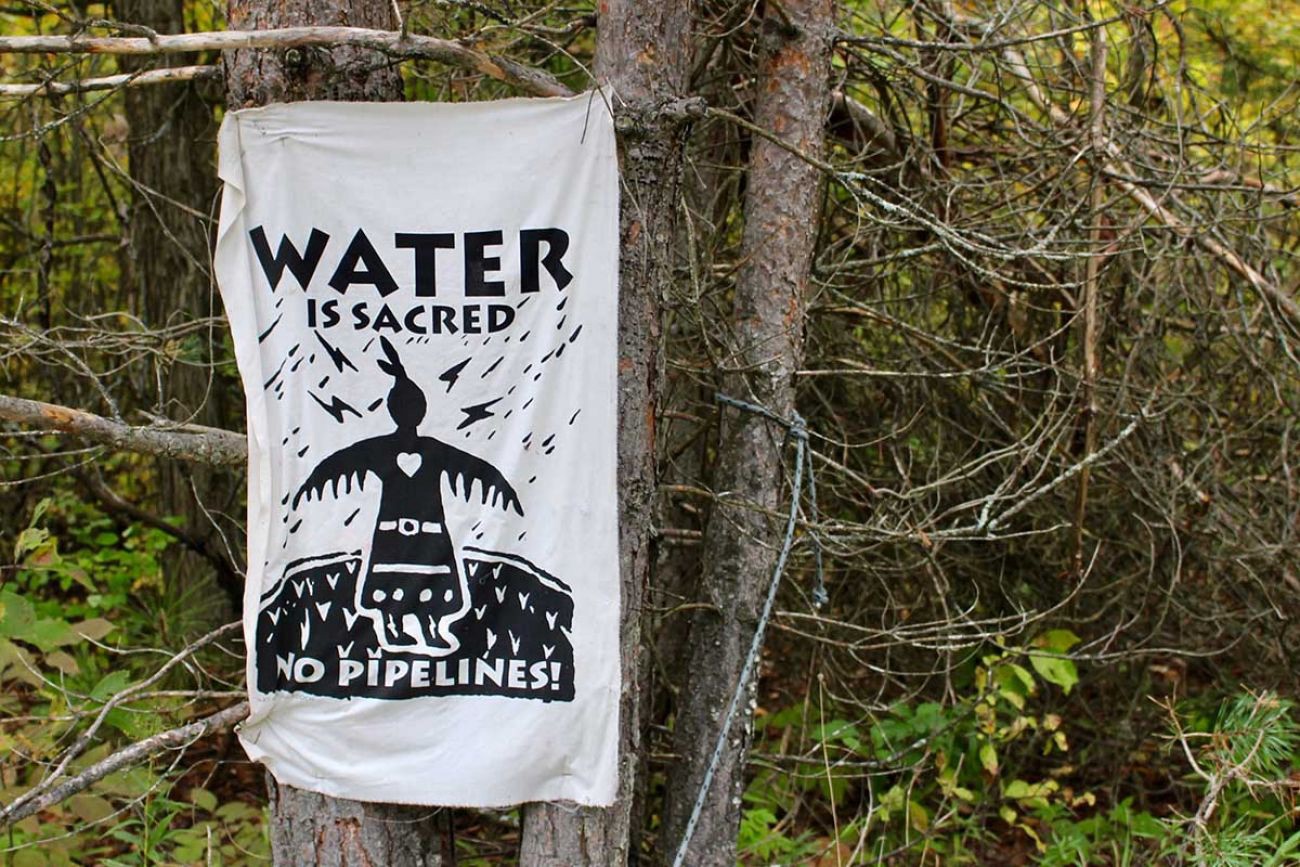
Bar River Ojibwe Sues Army Corps over Enbridge Line 5 Reroute

Here is the complaint in Bad River Band of Lake Superior of Chippewa v. United States Army Corps of Engineers (D.D.C.):

SCOTUS Denies Cert in Stroble v. Oklahoma Tax Commission

Here is today’s order list.

Cert stage materials here, here, and here.

Washington Federal Court Declines to Intervene in State Court Dispute Involving Frank’s Landing

Here are the materials in Frank’s Landing Indian Community v. Enlow (W.D. Wash.):