This show aired on Tuesday. Guest commentators included Deb Haaland for the first half and John Dossett and Ann Tweedy for the second half.
Environmental Assessment Not Vacated on Remand in Dakota Access
Here are the documents in the matter of Standing Rock Sioux Tribe et al v. U.S. Army Corps of Engineers et al (D.D.C. 16-cv-01534):
Other materials posted here.
Excerpt:
In light of the “serious possibility” that the Corps will be able to substantiate its prior conclusions, the Court finds that vacatur is not the appropriate remedy in this case. That determination does not, however, excuse Defendants from giving serious consideration to the errors identified in this Court’s prior Opinion. Compliance with NEPA cannot be reduced to a bureaucratic formality, and the Court expects the Corps not to treat remand as an exercise in filling out the proper paperwork post hoc. After the agency’s further work on remand, the parties may well disagree over the sufficiency of its conclusion. If and when such a dispute arises, they will again have the opportunity to address whether Defendants have in fact fulfilled their statutory obligations.
Nooksack Update in Federal RICO Action
Here are new materials in Rabang v. Kelly (W.D. Wash.):
122 Plaintiffs’ Supplemental Summary Judgment Response
Ninth Circuit briefs in Rabang v. Kelly are here.
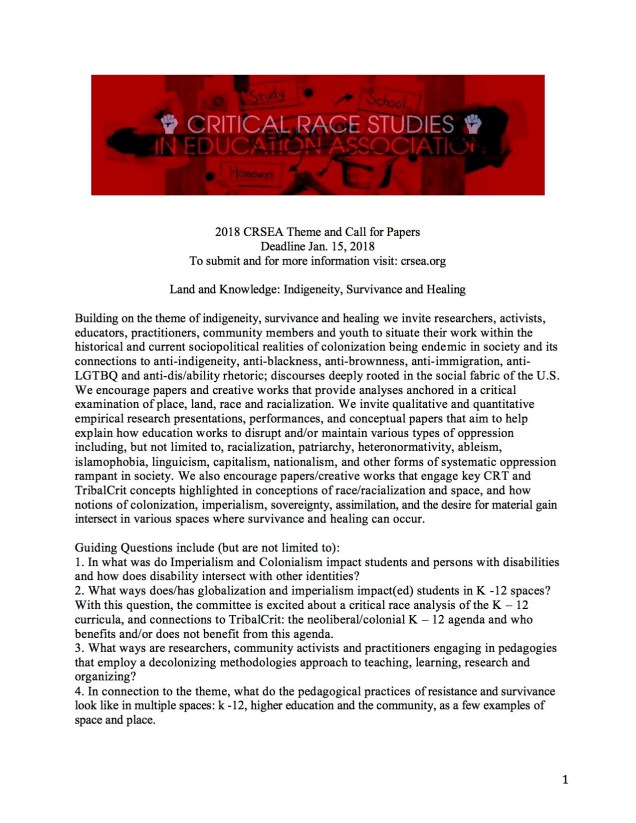
2018 Critical Race Studies in Education Theme & Call for Papers Deadline: Jan. 15, 2018; Hosted at UNM May 30-June 1, 2018
Here:
2018 Critical Race Studies in Education Association (CRSEA)
Theme: Land & Knowledge: Indigeneity, Survivance and Healing
Call for Papers Submission Period: Oct. 30, 2017 – Jan. 15, 2018
The Conference will be hosted at The University of New Mexico, Albuquerque, NM, Student Union Bldg.
Conference Dates: Wed. May 30 – Fri. June 1, 2018. Website: crsea.org
Herrera v. Wyoming Cert Petition
Here:
2017-10-05 Herrera Cert Petition
Question presented:
Whether Wyoming’s admission to the Union or the establishment of the Bighorn National Forest abrogated the Crow Tribe of Indians’ 1868 federal treaty right to hunt on the “unoccupied lands of the United States,” thereby permitting the present-day criminal conviction of a Crow member who engaged in subsistence hunting for his family.
The Onion: “EPA To Drop ‘E,’ ‘P’ From Name”
Here.
Paul Spruhan on the Law of the Certificate of Degree of Indian Blood (CDIB)
Paul Spruhan posted “CDIB: The Role of the Certificate of Degree of Indian Blood in Defining Native American Legal Identity” on SSRN.
The abstract:
This essay discusses the “CDIB” or Certificate of Indian or Alaska Native Blood, a document that proves an individual’s quantum of Native American blood. The CDIB is a federal document issued by the Bureau of Indian Affairs or by tribal nations through a “638” self-determination contract, but without published regulations or even clear written guidelines. The essay discusses its mysterious origins, its primary purpose, and its role in defining Native American legal identity. It also suggests some provisions to be included in final regulations, should the Bureau of Indian Affairs revive its attempt to publish CDIB regulations.
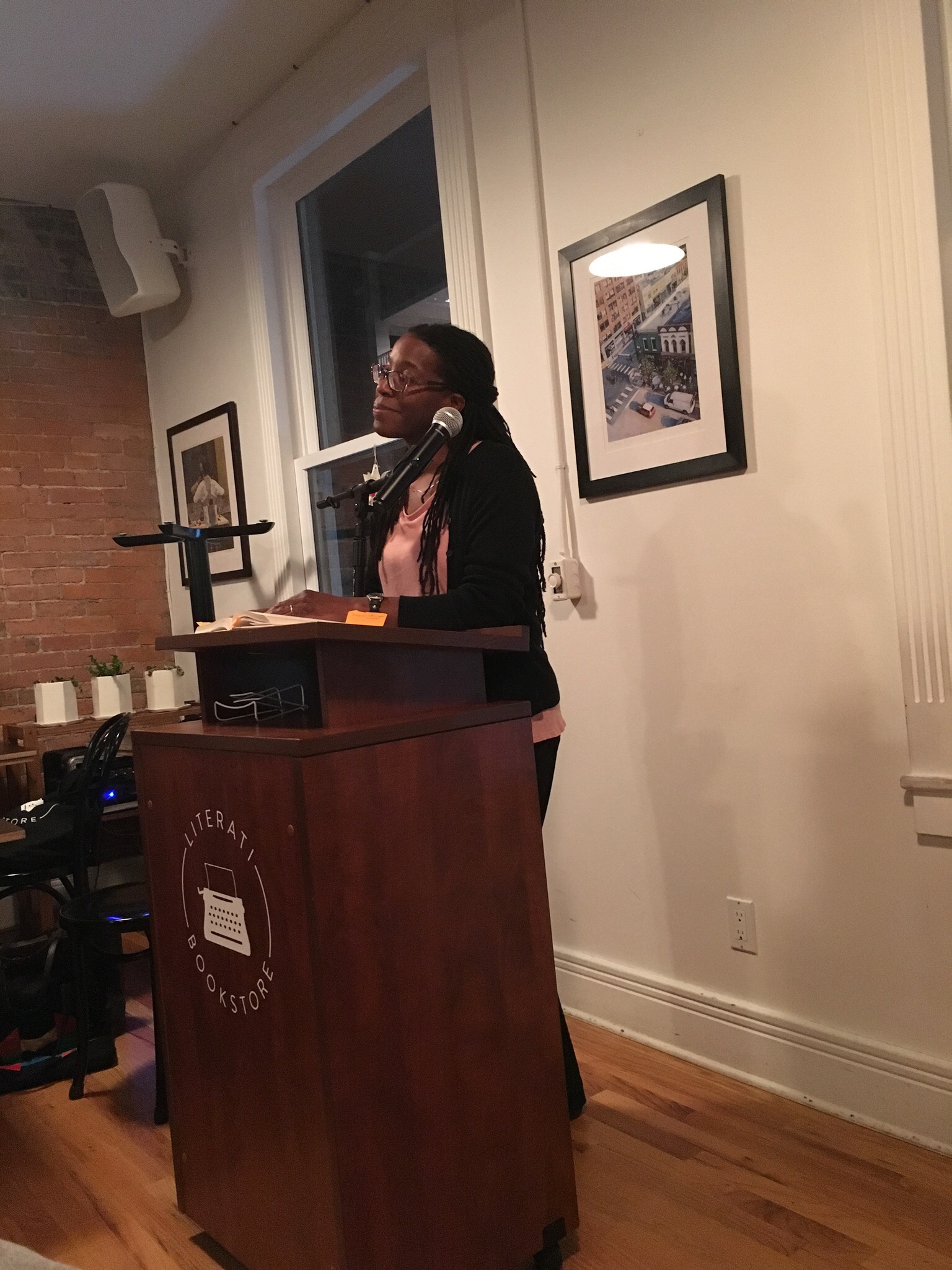
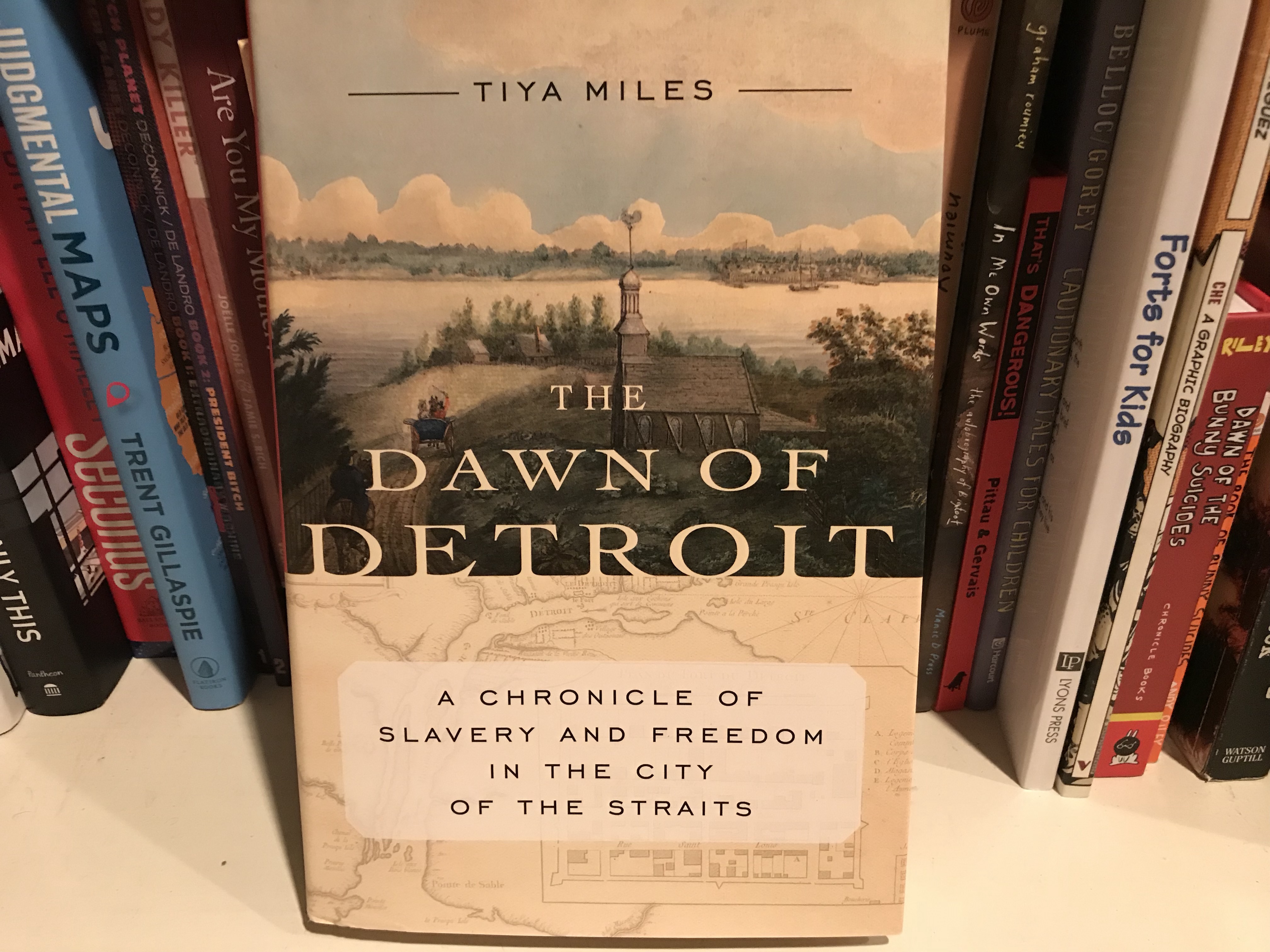
Tiya Miles Lecture on “The Dawn of Detroit” (Indigenous Peoples’ Day)
The book page is here. The blurb:
Most Americans believe that slavery was a creature of the South, and that Northern states and territories provided stops on the Underground Railroad for fugitive slaves on their way to Canada. In this paradigm-shifting book, celebrated historian Tiya Miles reveals that slavery was at the heart of the Midwest’s iconic city: Detroit.
In this richly researched and eye-opening book, Miles has pieced together the experience of the unfree—both native and African American—in the frontier outpost of colonial Detroit, a place wildly remote yet at the center of national and international conflict. Skillfully assembling fragments of a distant historical record, Miles introduces new historical figures and unearths struggles that remained hidden from view until now. The result is fascinating history, little explored and eloquently told, of the limits of freedom in early America, one that adds new layers of complexity to the story of a place that exerts a strong fascination in the media and among public intellectuals, artists, and activists.
A book that opens the door on a hidden past, The Dawn of Detroit is a powerful and elegantly written history, one that completely changes our understanding of slavery’s American legacy.
Here:
Register Today for the TICA/ILPC Conference!
Register and attend the only conference dedicated to issues facing in-house tribal counsel! October 26-27
Details and registration here.
Speakers include:
Paul Spruhan, Navajo Nation Dept. of Justice
Jean Back, Schwabe, Williamson, & Wyatt
Jessica Intermill, Hogen Adams
Lloyd B. Miller, Sonosky Chambers LLP
Phil H. Tinker, Kanji & Katzen
Venus McGhee Prince, Kilpatrick Townsend LLP
Lori Madison Stinson, Poarch Band of Creek Indians
Brian Pierson, Godfrey & Kahn David Smith, Kilpatrick Townsend LLP
Mark Reeves, Kilpatrick Townsend LLP
Brad Stinson, Poarch Band of Creek Indians
Breann Nu‘uhiwa, Pechanga Band of Luiseño Indians
Pilar Thomas, Lewis Roca Rothgerber Christie LLP
Maya Kane, Kane Law LLC
Katherine Belzowski, Navajo Nation
Jack Trope, Casey Family Programs
Kandis Martine, Navajo Nation Dept. of Justice
Kathryn E. Fort, MSU Indigenous Law & Policy Center
Dan Rey-Bear, Rey-Bear McLaughlin LLP P
rofessor Monte Mills, University of Montana Law
Mary J. Pavel, Sonosky Chambers LLP
Jessica Intermill, Hogen Adams
Peter Ortego, Ute Mountain Ute Tribe
Lenor Scheffler Blaeser, Lower Sioux Indian Community
Sharon Avery, Saginaw Chippewa Tribe
The Onion: “Supreme Court Justices Gather In Chambers To Receive Latest Mission From Large Talking Head Of Justice John Marshall”
Here.
An excerpt, quoting Chief Justice Marshall: “Remember: The fate of federal shipping regulation depends upon you!”
 Turtle Talk
You must be logged in to post a comment.