Here.
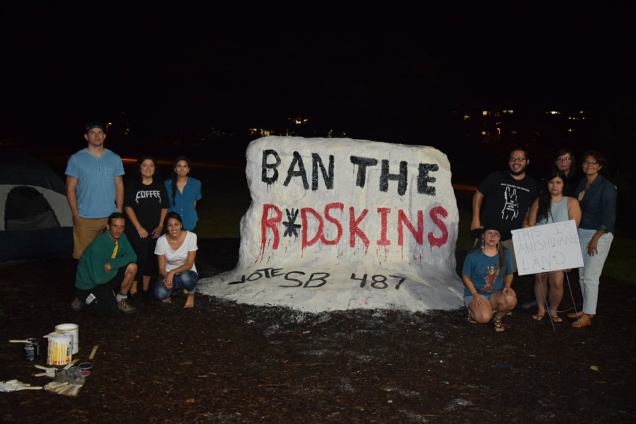
The Chronicle: “Brown U. and Native American Tribe End Standoff Over Land”
Here.
Here.
Here are the materials in Club One Casino Inc. v. Dept. of Interior (E.D. Cal.):
Inviting Tribal Court Clerks and Court Personnel to join us for the National American Indian Court Judges Association’s (NAICJA) Tribal Court Clerks Certification & Court Personnel Training during NAICJAs’ Annual Conference! This is a great training to get certification, learn court clerk best practices, managing and reducing your backlog, and more! We have wonderful trainers as well as tribal judicial faculty. The networking is invaluable. We would love to see you there!
Tuesday, October 10, 2017 6:00 PM – Friday, October 13, 2017 12:00 PM (MST)
Isleta Casino & Resort
(505) 724-3800
11000 Broadway Boulevard Southeast
Albuquerque, New Mexico 87105
Registration fee covers all scheduled events and includes food and beverage for:
Questions:
Contact Bridget McCleskey, NAICJA Conference Coordinator at:
Phone: (907) 854-9470
Email: confcoor@gmail.com
https://www.regonline.com/builder/site/Default.aspx?EventID=1984503
Please Join the Tribal Supreme Court Project for the Webinar, “Indian Country, the Supreme Court, and the Long Conference” – Monday, September 25, 2017 at 2:00 p.m. Eastern
On September 25, the United States Supreme Court will hold its “long conference” where the justices consider all of the petitions for certiorari that have gathered during the summer recess. This effort will set much of the docket for the coming term. There are a number of petitions on matters in federal Indian law.
The Tribal Supreme Court Project will hold a webinar on September 25 at 2:00 p.m. (Eastern) to review these pending certiorari petitions and discuss the importance of the certiorari process.
The webinar will:
Provide an overview of how the certiorari process works;
Review both the granted and pending cert cases that affect issues in federal Indian law, with brief discussions by the attorneys representing tribal governments; and
Review the principles of the Tribal Supreme Court Project and discuss how tribes can work together to improve our odds of success before the United States Supreme Court.
You can register: here
You can find a list of all the pending cert petitions: here
For additional information please contact NCAI General Counsel John Dossett at jdossett@ncai.org or NARF Senior Staff Attorney Joel Williams at williams@narf.org.
Here is the brief in the matter captioned Mylan Pharmaceuticals Inc. v. Allergan Inc.:
Here.
An excerpt from the statement summary:
Statement Summary:
JUSTIN TRUDEAU, Prime Minister of Canada, recalled that, throughout his country’s history, it had worked hard to achieve its ambitions at home and elsewhere in the world. Canada was built on the ancestral land of indigenous peoples, he recalled, and was regrettably a country that came into being without the meaningful participation of those who were first there. The indigenous peoples were the victims of a Government that did not respect them, their traditions, their attributes, their way of governance, or their laws. They were victims of a Government that sought to rewrite their unique history and refused to protect the lands and water. It was a great shame that that lack of respect persisted today.
Here is the opinion in Upper Skagit Indian Tribe v. Suquamish Indian Tribe.
An excerpt:
In this treaty fishing rights case, the Upper Skagit Indian Tribe (“the Upper Skagit”) filed a Request for Determination as to the geographic scope of the Suquamish Indian Tribe’s (“the Suquamish”) usual and accustomed fishing grounds and stations (“U&A”) as determined by Judge Boldt in 1975. Specifically, the Upper Skagit sought a determination that the Suquamish’s U&A determinations do not include Chuckanut Bay, Samish Bay, and a portion of Padilla Bay where the Upper Skagit has its own court-approved U&A determinations (“the Contested Waters”). On cross-motions for summary judgment, the district court concluded that Judge Boldt did not intend to include the Contested Waters in the Suquamish’s U&A determinations and, accordingly, granted summary judgment to the Upper Skagit. We have jurisdiction pursuant to 28 U.S.C. § 1291. Reviewing de novo, we affirm.
Briefs here.
 Turtle Talk
You must be logged in to post a comment.