Happy Michigan Indian Day: A Snapshot of Michigan Tribes Exercising Sovereignty

Today is Michigan Indian Day, designated by Michigan law as the fourth Friday of every September.

In honor of the day, I’m offering a snapshot of what Tribal sovereignty looks like in Michigan. It includes:

Land Back • Treaty Rights • Citizenship • Education • Child Welfare • Health Care • Policing • Courts • Utilities • Economic Regulation • Manoomin • Culturally Grounded Governance

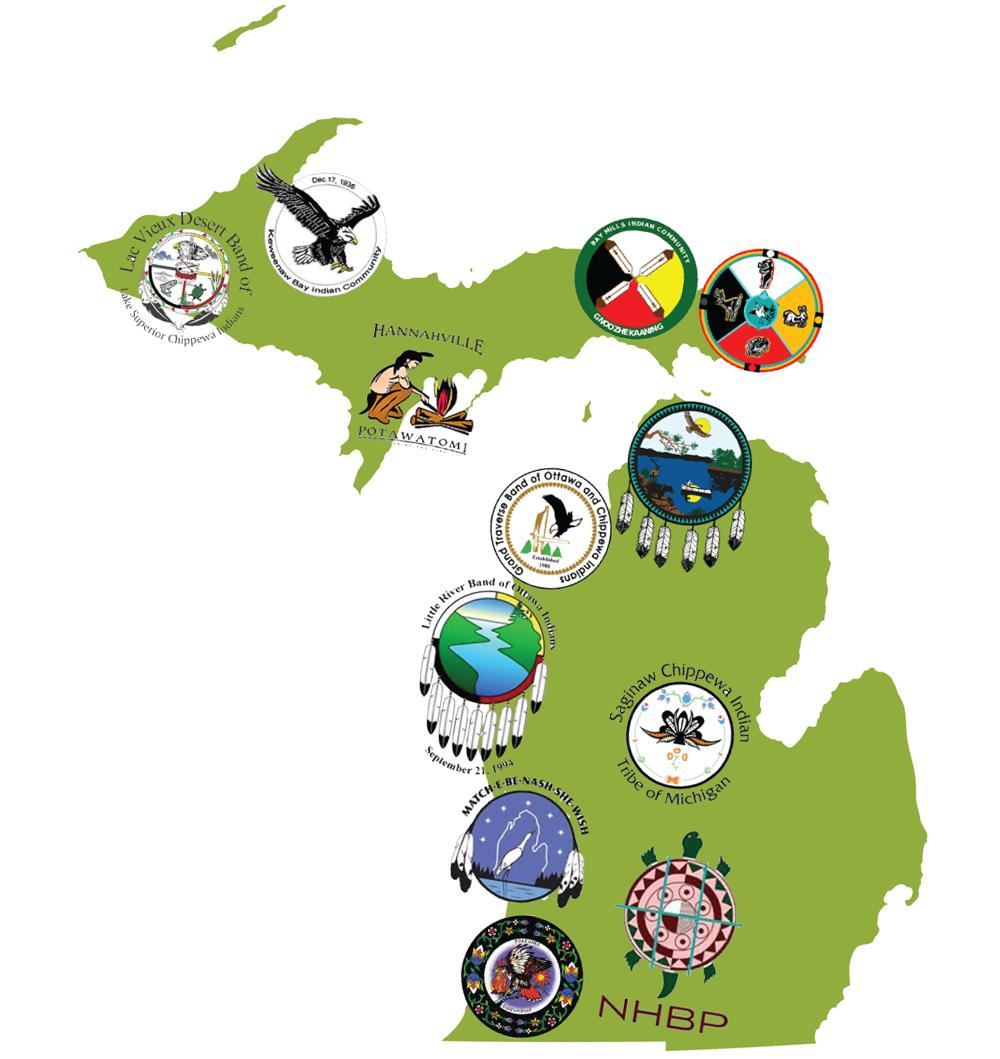
Below are 12 recent examples, one drawn from each Michigan Tribe.

It looks like bringing ancestral land home, and deciding what happens next. At the end of 2024, 188 acres along West Grand Traverse Bay were returned to the Grand Traverse Band of Ottawa and Chippewa Indians. GTB named the land Mashkiigaki, “place of the medicines,” reflecting its significance for hunting, fishing, gathering, medicines, wetlands, and coastal habitat. Since then, GTB has begun reconnecting Tribal citizens with the land and laying the groundwork for ecocultural restoration. The Tribe has surveyed citizens about their memories and aspirations for Mashkiigaki, initiated bird and invasive species surveys, planned a study of creek and wetland hydrology, and begun mapping sensitive habitat and possible public access routes. In 2026, GTB received approximately $1.3 million from NOAA, part of the federal grant approved in 2024, to support restoration and community engagement at Mashkiigaki. The planning remains Tribal-led, with elders, citizens, and government staff helping determine the land’s future. GTB’s announcement on the return of Mashkiigaki

It looks like leading a fight to protect treaty-protected waters. Bay Mills Indian Community has been a central leader in the Tribal campaign against both the existing Line 5 dual pipelines and Enbridge’s proposed tunnel beneath the Straits of Mackinac. Its opposition is grounded in the 1836 Treaty of Washington, treaty-protected fishing and gathering rights, and the Tribe’s sovereign responsibility to protect Michilimackinac, a sacred place at the heart of Anishinaabe creation traditions. Bay Mills formally called for Line 5’s decommissioning in March 2015, supported Michigan’s 2020 revocation and termination of Enbridge’s 1953 easement, and in 2021 formally banished Line 5 from Tribal lands, including the Straits. The Tribe also helped bring the dispute before the U.N. Permanent Forum on Indigenous Issues, which in 2023 recommended that the United States and Canada decommission Line 5. In litigation over the existing crossing, Bay Mills filed amicus briefs supporting the State’s efforts to keep its shutdown cases in state court, including a 2023 Sixth Circuit brief in Nessel v. Enbridge on behalf of a coalition that NARF describes as more than 60 Tribal Nations and First Nations.

Bay Mills has simultaneously challenged the proposed tunnel before the Michigan Public Service Commission, EGLE, the Michigan courts, and the U.S. Army Corps of Engineers. It intervened in the MPSC proceeding and introduced Tribal and expert testimony on treaty rights, fisheries, climate impacts, alternatives, and tunnel explosion risks. It also challenged EGLE’s 2021 wetlands permit and participated in the Army Corps’ federal review as a cooperating agency. In March 2025, Bay Mills and other Tribes withdrew as cooperating agencies after the Corps moved to fast-track approval under the asserted national “energy emergency.” The MPSC approved the tunnel in December 2023, and the Court of Appeals affirmed in February 2025. In July 2026, the Michigan Supreme Court vacated the MPSC’s approval. It remanded for a new analysis of the project’s environmental effects, feasible alternatives, and impacts on public trust resources (In re Application of Enbridge Energy to Replace & Relocate Line 5, No. 168335 (Mich. July 31, 2026)). EGLE had approved wetlands and bottomlands permits for the tunnel two weeks earlier. The Army Corps issued its record of decision in August notwithstanding the ruling, and Bay Mills condemned the federal decision as a breach of treaty and trust responsibilities. In September 2026, after Governor Whitmer announced that EGLE would re-review its permits, Bay Mills and three other Tribal Nations petitioned for a contested case hearing to overturn them. Bay Mills’ Line 5 information portal Michigan Supreme Court decision

It looks like deciding who belongs to the political community. In March 2026, Hannahville Indian Community amended its Tribal Enrollment Ordinance, governing membership applications, the Enrollment Committee, appeals, records, relinquishment, and loss of membership. Few exercises of governmental authority are more foundational than determining the citizenship of the political community. Hannahville’s 2026 Tribal Enrollment Ordinance

It looks like reshaping a regional education system. Keweenaw Bay Indian Community is leading a five-year Promise Neighborhood covering the L’Anse Reservation and surrounding Baraga County. The cradle-to-career initiative links local schools with early childhood, family, college, and career supports; KBIC cultural advocates and Ojibwe language instructors also work with area schools to bring Ojibwe language, history, and culture into classrooms. KBIC Promise Neighborhoods U.S. Department of Education project profile

It looks like exercising responsibility for Tribal children under Tribal law. The Saginaw Chippewa Indian Tribe governs child protection through its own Children’s Code and institutions. Tribal law provides for Children’s Court jurisdiction, child protection proceedings, foster care and child care regulation, adoption, and other matters affecting Tribal children, while Anishnaabeg Child and Family Services carries out child and family services within that Tribal governmental and legal framework. Saginaw Chippewa Children’s Code Anishnaabeg Child and Family Services

It looks like building a health system across the Upper Peninsula. The Sault Ste. Marie Tribe of Chippewa Indians operates nine health clinics or centers across its 7-county service area, providing varying combinations of medical, dental, behavioral health, pharmacy, and other services. Earlier this week, the Tribe broke ground on a major expansion and renovation of its Sault Health Center, designed to improve patient care while maintaining connections to Anishinaabe spiritual and cultural beliefs. Sault Tribe Health Division September 22 groundbreaking announcement

It looks like making jurisdiction work across borders. In October 2025, the City of Petoskey formally swore in Little Traverse Bay Bands of Odawa Indians Tribal Police under a cross-deputization arrangement allowing LTBB officers to assist within city jurisdiction. Petoskey officers, in turn, were to be sworn in by LTBB so they could respond where the Tribe has primary jurisdiction. The arrangement is especially striking given that shortly after LTBB’s federal reaffirmation, local officials once accused its officers of “impersonating police officers.” Today, Tribal and local governments extend law enforcement authority to one another. Petoskey Department of Public Safety 2025 Annual Report Frank Ettawageshik recounts LTBB’s earlier cross-deputization history

It looks like a Tribal court telling another branch of Tribal government what the Constitution requires. In Romanelli v. Tribal Council, the Little River Band of Ottawa Indians Tribal Court ruled in May that the Ogema’s proposed FY2026 budget had become the Tribal budget by operation of the Constitution and issued a writ of mandamus requiring the Tribal Council to appropriate the funds. That’s Tribal constitutional law in action, with a Tribal judiciary resolving a separation of powers dispute within Tribal government. Romanelli v. Tribal Council order

It looks like making sure the drinking water is safe and the sewer system works. In March, the Match-E-Be-Nash-She-Wish Band of Pottawatomi Indians (Gun Lake Tribe) enacted a new Water and Sewer Act. The law creates a Tribal regulatory system covering utility connections, permits, inspections, industrial discharges, water use restrictions, enforcement, fines, and Tribal Court proceedings. Sometimes sovereignty looks like constitutional litigation, and sometimes it looks like the sewer code. Gun Lake Tribe Water and Sewer Act

It looks like regulating a new market, and mobilizing government to protect citizens. In 2025, the Lac Vieux Desert Band of Lake Superior Chippewa Indians entered a Tribal-State cannabis compact allowing a Tribally regulated cannabis business to participate in Michigan’s regulated market. Then, in January, amid concerns about ICE activity affecting Native people, the Tribal Council issued formal guidance to citizens, waived fees for replacement Tribal IDs, and directed citizens to Tribal enrollment, law enforcement, leadership, and legal offices for assistance. LVD–Michigan cannabis agreement LVD Tribal Council statement regarding ICE activity

It looks like making law for a relative rather than merely regulating a commodity. In September 2025, the Nottawaseppi Huron Band of the Potawatomi enacted a Mnomen (Wild Rice) Code. The law recognizes Mnomen as the Tribe’s official grain and a protected Tribal resource, creates a Mnomen Wgema composed of Tribal citizens, regulates harvesting and transplantation, authorizes enforcement by Tribal conservation officers, and provides penalties for violations. The Code also recognizes Mnomen as a living spirit, medicine, and part of the Tribe’s migration story. Environmental regulation, cultural responsibility, and Indigenous law operate here in the same legal framework. NHBP Mnomen (Wild Rice) Code

It looks like designing governmental institutions on Indigenous terms. Under the Pokagon Band of Potawatomi Indians’ Elders Council Code, the Elders Council is a governmental instrumentality that provides guidance to the membership and to the Band’s legislative, executive, and judicial institutions on matters of history, traditions, and culture. Pokagon law also permits one of the seven Tribal Council seats to be held by an Elders Council representative, who carries all the rights and responsibilities of a Tribal Councilperson. Pokagon Elders Council Code, current through May 2026

Every day across the state, each of Michigan’s 12 Tribes exercises governmental authority over lands, resources, institutions, services, and citizens.
The House Natural Resources Committee Advances Tribal Buffalo Bill as Interior Restricts Bison Grazing

The House Natural Resources Committee is moving to support Tribal buffalo restoration while the BLM is proposing a grazing rule that could make some bison restoration projects harder to sustain on federal land.

On September 15, the House Natural Resources Committee advanced the Don Young Doug LaMalfa Indian Buffalo Management Act. H.R. 7954 would support Tribal buffalo programs, authorize Interior to transfer surplus buffalo from federal land to Indian land, and require Interior’s buffalo management policy for Indian land to follow Tribal laws and Tribally approved plans. Interior has testified in support of the bill.

In May, BLM revoked American Prairie’s permits to graze bison on federal land in Montana, saying the Taylor Grazing Act permits grazing only for livestock managed primarily for production. BLM has also proposed applying a “production-oriented livestock” requirement to BLM grazing permits outside Alaska and eliminating the separate permit provision for indigenous animals. The comment period closed July 13; the rule hasn’t been finalized.

American Prairie’s herd has supplied bison to other herds for food sovereignty, cultural restoration, and hunting. On September 4, a federal judge granted a preliminary injunction for the three allotments where its bison already graze, finding American Prairie likely to succeed on its claims. The judge expressly considered the effects of BLM’s decision on American Prairie’s Tribal partners.

The proposed rule would also reach Tribal herds directly. BLM said its American Prairie decision did not affect Tribal grazing authorizations or Tribal bison herds, but the proposed rule contains no Tribal exclusion. When BLM first applied the production-oriented test to American Prairie in January, the Coalition of Large Tribes protested that it would make it unlikely any Tribal herd could qualify for BLM leases, including those the Fort Bidwell Indian Community and Pit River Tribe are seeking for their buffalo. The proposed rule would apply that test to BLM grazing permits outside Alaska, and COLT has objected that it was published without prior Tribal consultation.

The bill wouldn’t decide American Prairie’s case or govern BLM grazing permits. But the case shows why the proposed rule matters to Tribal restoration, since buffalo raised on federal land can be part of bringing buffalo back to Tribal communities.

Related Resources

H.R. 7954

House Natural Resources Committee, September 15 markup announcement

Bureau of Land Management, May 8 permit decision announcement

September 4 preliminary injunction order, American Prairie Foundation v. U.S. Department of the Interior

Coalition of Large Tribes protest letter, January 30, 2026

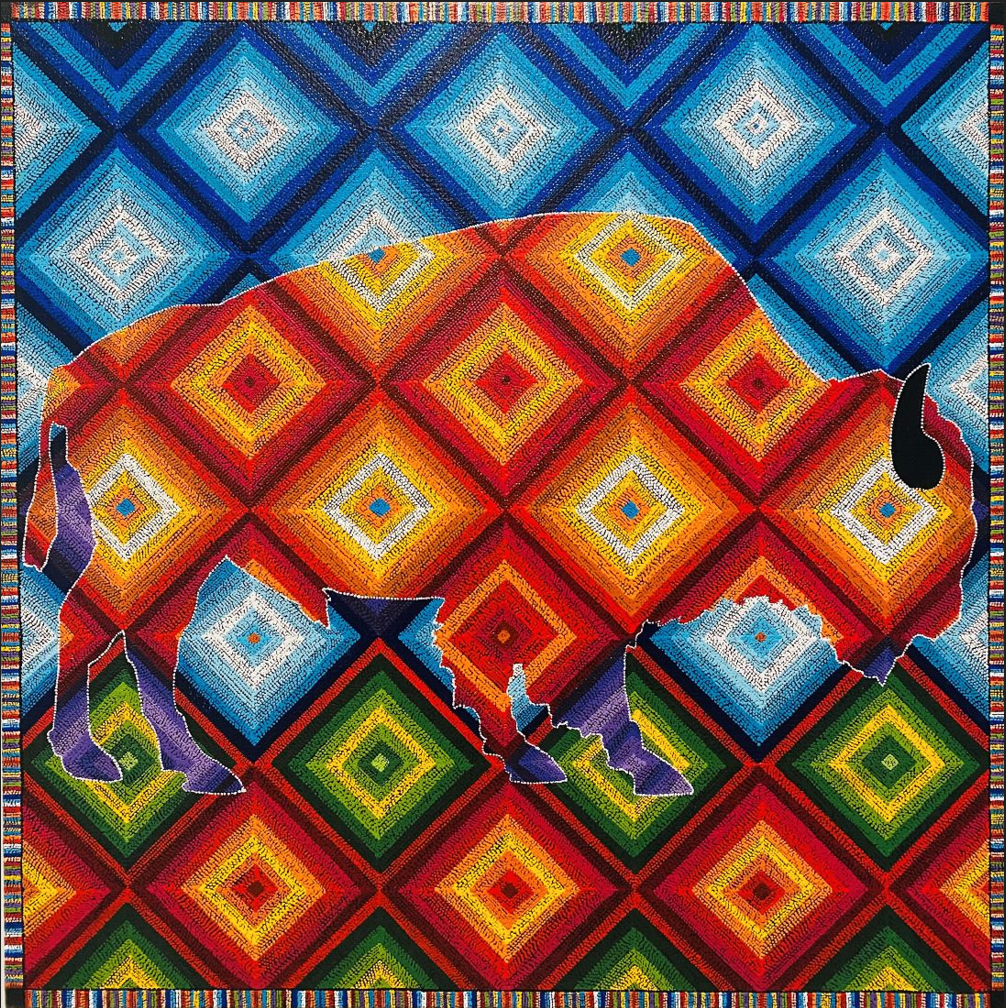
Disappearing Bison by Starr Hardridge (Muscogee Creek Nation)

Congress Required Assessment of State ICWA Compliance. It Didn’t Tie Shortfalls to Corrective Plans or Funding Consequences

In my earlier post today, I wrote that neither S. 4976 nor S. 4638 would require HHS to evaluate each state’s compliance with ICWA. That’s true of the bills, but it leaves out an important piece of existing law.

Congress has already required federal assessment and reporting. 42 U.S.C. § 628d directed HHS to develop an ICWA technical assistance plan by October 1, 2025. The plan must use data sufficient to assess state performance on identifying Indian children, notifying Tribes, transferring cases to Tribal court, and complying with ICWA’s requirements for placements and termination of parental rights. Every two years, HHS must report to Congress on state compliance and federal efforts to improve it.

That framework isn’t fully operating, however. In a report dated July 15, 2026, ACF described the plan as still under development. As of September 23, I couldn’t locate a published plan or an announcement that it had been completed.

Existing federal data is limited. States currently report only four categories of ICWA-related information through AFCARS, and ACF has identified serious reliability problems. A 2024 rule will substantially expand that collection, but states won’t begin collecting the new data until October 1, 2028. The first files containing the new data aren’t due to ACF until May 15, 2029. That leaves the central gap identified by the Commission on Native Children. The Commission didn’t only ask for better information. Recommendation 2 called for improvement plans when states fall short and for progress toward ICWA benchmarks to matter for federal child welfare funding.

Current law doesn’t create that system. States must describe their ICWA measures in their Title IV-B plans, and HHS has general authority to enforce compliance with approved plans. In its 2024 AFCARS rule, however, ACF stated that it has no jurisdiction to impose consequences on states under ICWA, and the Bureau of Indian Affairs has told ACF that it has no role in enforcing state compliance either. The law establishes no substantive ICWA performance benchmarks and doesn’t require ICWA-specific corrective plans or funding consequences when a state falls short.

That doesn’t mean any funding penalty would improve compliance. Justice Anne McKeig of the Minnesota Supreme Court told ACF in a 2025 comment that Minnesota law allows the state to reduce federal funding to counties it finds didn’t fully comply with ICWA in the preceding year, sometimes because of a technicality outside the county’s control. She warned that the penalty can deprive a struggling county of the money it needs to provide active efforts. The Commission proposed a more calibrated approach that includes improvement plans with benchmarks, with progress tied either to continued federal funding or to additional incentive funds.

ACF’s consultation report records Tribal recommendations for annual state reporting and actionable improvement plans. It also records a recommendation that states failing to consult with Tribes not receive administrative costs. ACF didn’t commit to those measures.

Ultimately, neither S. 4976 nor S. 4638 closes this gap. Congress has required the federal government to identify where states are falling short, but it hasn’t created the improvement and accountability system the Commission recommended.

An immediate opportunity

ACF is accepting written comments from Tribes for its 2026 Annual Tribal Consultation until 5:00 p.m. ET this Friday, September 25. Comments can be sent to tribalaffairs@acf.hhs.gov with the subject line “ACF Tribal Consultation Testimony.”

Tribal Nations could ask ACF to publish the § 628d plan, state whether and when it was completed, and explain how it will assess and respond to state noncompliance before the expanded AFCARS data become available.

Resources

The Way Forward: Report of the Commission on Native Children

42 U.S.C. § 628d

ACF Tribal Consultation Report (dated July 15, 2026)

Public Comments, Regulations.gov Docket ACF-2025-0038

ACF’s 2024 AFCARS Final Rule

ACF Annual Tribal Consultation Notice

The Native Children’s Bills Would Fund Tribal Services. What Would They Ask of States?

Update, September 23, 2026: This post understated what current federal law already requires. Congress has required federal assessment of state ICWA compliance, but it hasn’t tied shortfalls to corrective plans or funding consequences. See the follow-up post.

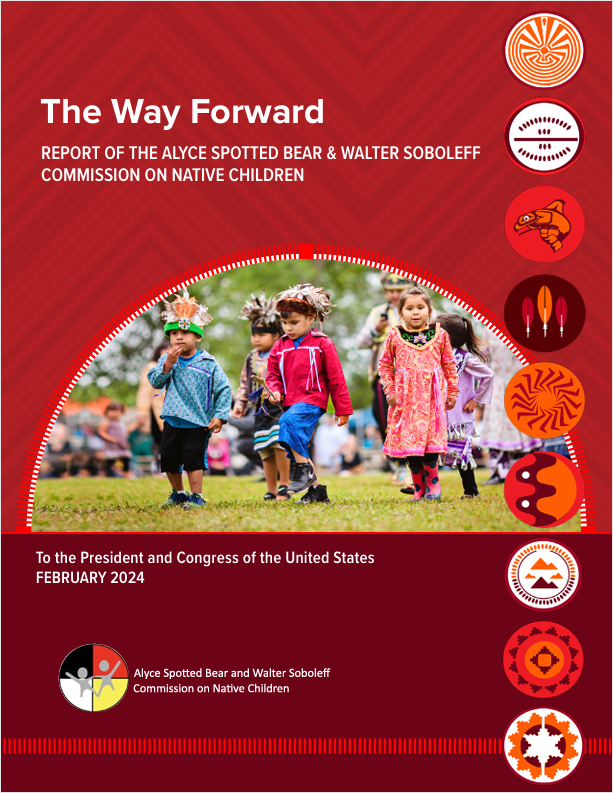
In 2024, the Alyce Spotted Bear and Walter Soboleff Commission on Native Children issued The Way Forward, with 29 recommendations shaped by testimony across Native communities. Several bills now respond to its call for stronger Tribal services. They’d give Tribes more resources to care for children. They wouldn’t add the state ICWA accountability measures the Commission sought in Recommendation 2.

The Senate Indian Affairs Committee’s 2025 discussion draft had nine titles, beginning with Child Welfare. The introduced Native Children’s Commission Implementation Act, S. 4976, has eight. Child welfare proposals also appear in the separately introduced Promoting Strong Native Families and Children Act, S. 4638. A third proposal addresses Tribal funding under the Child Abuse Prevention and Treatment Act, or CAPTA. NICWA is urging support for all three.

What the bills carry forward:

  • S. 4976 would codify the family-centered Tiwahe Initiative, expand it beyond ten pilot sites, and authorize $100 million annually. It would also protect recurring Tribal justice base support for Tribes in Public Law 280 states.
  • S. 4638 would increase several Tribal child welfare funding set-asides, create a 5% Tribal allocation in the Social Services Block Grant, and let qualifying Tribes operate a Title IV-E prevention-only program.
  • Those provisions answer significant parts of Recommendation 1, though they don’t provide the full funding parity the Commission envisioned. The separate CAPTA bill addresses another part of that recommendation.

Where S. 4976 stops short:

  • Recommendation 29 called for a government-wide Native data and research office. The bill proposes a Tribal Health Research Office at NIH.
  • Recommendation 23 called for screening places Native children frequent for toxic exposures and providing an assessment when a patient or parent requests one. The bill would build environmental health training and referral systems, but wouldn’t require either measure.
  • Recommendation 14 asked Congress to fund afterschool programs for Native children. The bill would allow afterschool programming under existing grants without providing new funding.

What remains outside these bills: Recommendation 2 called for HHS to assess how states implement ICWA and promote improvement. It also proposed specialized ICWA courts and enforceable plans to preserve a child’s connection to their Native community after adoption by a non-Native family. Those measures matter when a state fails to identify a child’s Tribe, involve it in the case, or sustain the child’s connections after adoption. None of the three bills adds them.

A 2024 ACF rule requires states to report additional ICWA-related data through AFCARS. NICWA is pressing for its full implementation and notes that the data will help ACF meet its existing duty to report to Congress on state ICWA compliance. The rule will provide data the federal government has long lacked. Neither S. 4976 nor S. 4638 would require HHS to evaluate each state’s compliance with ICWA or require a state to improve when it falls short. The Commission also recommended tying a state’s progress to its federal child welfare funding; neither bill does that.

Resources

The Way Forward: Report of the Alyce Spotted Bear & Walter Soboleff Commission on Native Children (February 2024)

Native Children’s Commission Implementation Act of 2026, S. 4976

Promoting Strong Native Families and Children Act, S. 4638

American Indian and Alaska Native Child Abuse Prevention and Treatment Act, S. 4179

American Indian and Alaska Native Child Abuse Prevention and Treatment Act, H.R. 8048

ACF’s 2024 AFCARS final rule on ICWA-related data collection

NICWA’s September 2026 Native Child and Family Policy Update

NICWA’s written comments for ACF’s 2026 Annual Tribal Consultation

The Way Forward, the February 2024 report
of the Alyce Spotted Bear and Walter
Soboleff Commission on Native Children.

From the Archives: Cherokee Language Hub offers Hundreds of Recordings and Stories for the next generation of Cherokee speakers

From the Hub:

The Cherokee Language Hub is both a learning resource and an archive of our written and oral language. You will find recordings, lessons, and stories passing on history and cultural memories to the next generation.

Saving the Voices

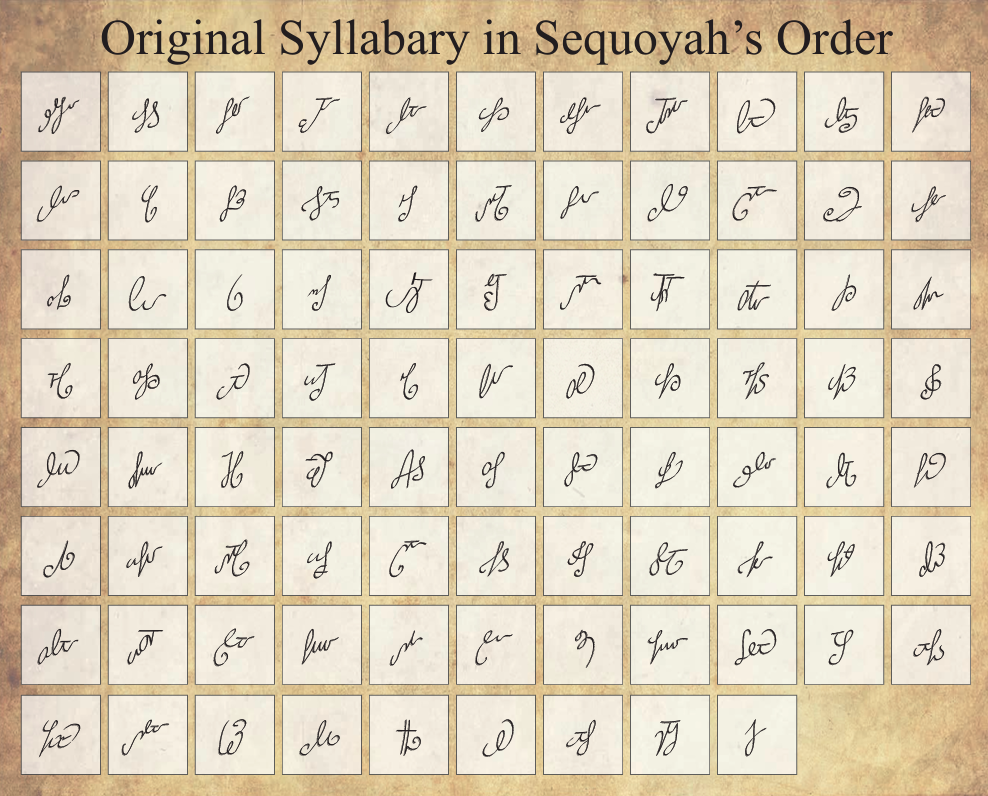
At over 1100 hours, this extraordinary collection is a lasting record of spoken Cherokee, preserving the language used to describe the world the elders knew. Each of the interviews is transcribed to Cherokee syllabary, translated to English, and brought to life in the Cherokee Language Hub to be carried across generations.

Access the Cherokee Language Hub here.

AI Governance Is a Tribal Sovereignty Project, Not Just an Employee Policy


Recent warnings that AI is advancing faster than government can control it have focused on threats to jobs, democracy, and even humanity. Whatever you might think of the most extreme predictions, AI needs guardrails and too few jurisdictions are responding. For tribes, that’s a sovereignty question.

The Cherokee Nation’s AI policy and Data Sovereignty and Governance Task Force report⁠ offers an important model of executive action. But Tribes aren’t merely employers. Sure, they purchase technology, control data and resources, own businesses, and manage employees, but they also legislate, regulate, prosecute, adjudicate, provide remedies, and negotiate with other governments.

Tribes can begin to take action by inventorying AI uses and assessing risks to citizens, elections, decision-making processes, Indigenous data, cultural knowledge, jurisdiction, treaty rights, and future generations. One possible approach is to use a sequence like below, with steps that will overlap and that can proceed in parallel:

continuous risk assessment → executive policy → employment, contracting, and procurement protections → administrative capacity → Tribal legislation creating rights, duties, oversight, and remedies → Tribal enforcement and remedies → intergovernmental and external enforcement

Jurisdictional limits matter, especially when vendors, data, or harmful actors are beyond a Tribe’s reach. But those limits make contracts and intergovernmental agreements more important; they don’t justify inaction. The magnitude of the risks also requires inter-Tribal coordination and resource-sharing between Tribes.

The question isn’t simply how Tribal employees should use AI. It’s how Tribal governments will exercise sovereignty over it.

Some Useful Resources

Cherokee Nation Data Sovereignty and Governance Task Force Report. Provides a Tribal-specific example of executive policy development, institutional assessment, data sovereignty, cybersecurity, and AI governance.

NIST Artificial Intelligence Risk Management Framework. Offers a structured method that Tribes can adapt to identify, measure, manage, and monitor AI risks.

CARE Principles for Indigenous Data Governance. Adds an Indigenous-specific framework centered on collective benefit, authority to control, responsibility, and ethics.

GovAI Coalition Templates and Resources for Public Agencies. Supplies practical policy, procurement, assessment, and vendor review tools that Tribes can revise to reflect Tribal law, values, jurisdiction, and sovereign immunity.

Tribal Innovations: Gila River Builds a Pathway to Medical Practice Within Its Health System

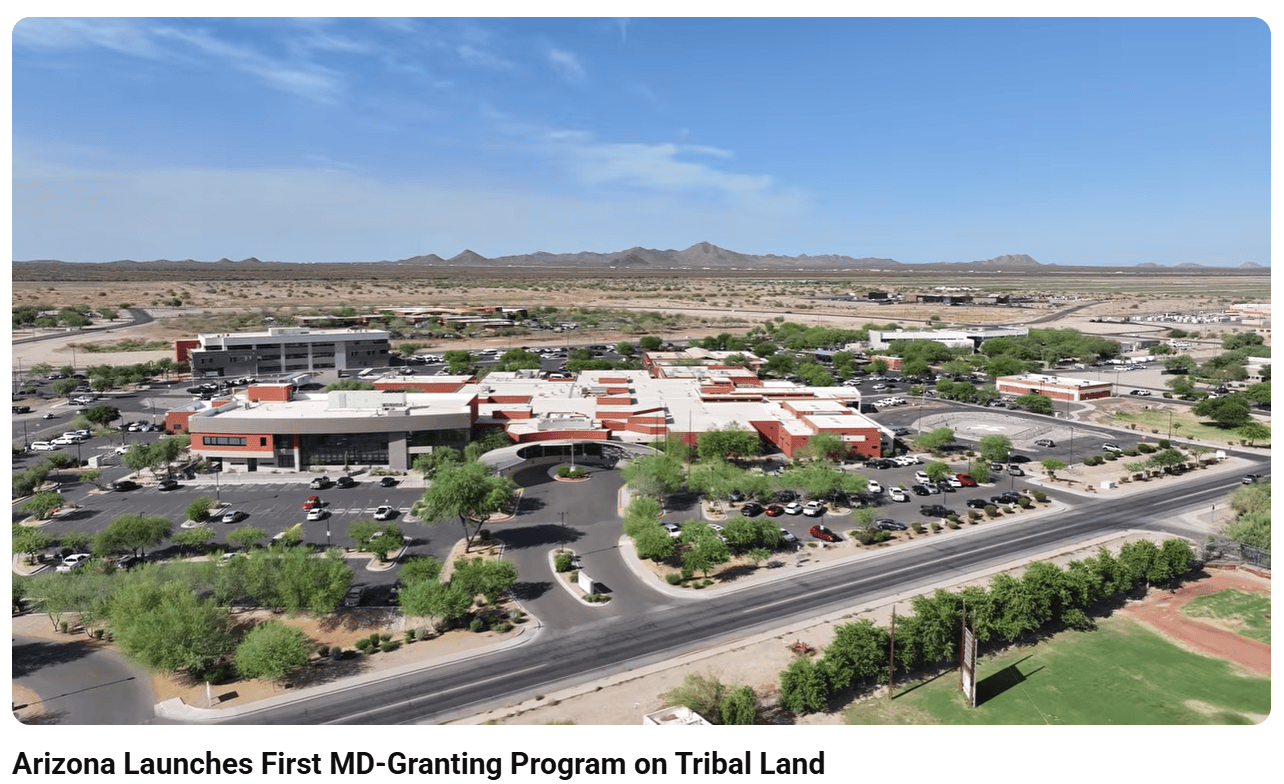
Gila River Health Care has committed more than $25 million through 2034 to establish a University of Arizona medical school branch within the Gila River Indian Community’s tribally operated health system. The investment will support faculty, educational infrastructure, and full tuition scholarships for students.

Beginning in July 2027, the branch plans to admit ten students each year to a three-year primary care MD program. Students will spend their first 18 months in Phoenix, then move to Sacaton, thirty-two miles southeast of Phoenix, for 18 months of clinical education within Gila River Health Care.

This goes beyond hosting a short clinical rotation. Gila River is funding a medical school branch where students will complete half of their training while caring for patients in a Tribal health system.

The joint announcement is here.

Additional Resources

Matthew Tobey, MD, et al., Graduate Medical Education in Indian Country: Addressing Workforce Shortages and Improving Health Outcomes, National Academy of Medicine Perspectives (Aug. 11, 2025)

Click the image above to watch a 2.5 minute video on this initiative.

Indigenous Food: Spirit Plate and A Feather and a Fork

If you’re looking for something to watch or cook this weekend, there are two good Indigenous food options.

Vision Maker Media is streaming Spirit Plate free throughout September. The series follows award-winning chef Pyet DeSpain (Prairie Band Potawatomi Nation) as she visits Indigenous communities to gather, fish, hunt, and cook with local foods. The 15-minute episodes include spearing Pacific lamprey with the Yurok Tribe, a bison stew for the Potawatomi Gathering, a feast with Onondaga seed keepers and matriarchs, halibut cooked for Haida elders in a longhouse, a Hawaiian underground-oven pig roast, and Tlingit beach asparagus and salmon.

And if you’re ready to cook, Crystal Wahpepah (Kickapoo Nation) published A Feather and a Fork this year, with 125 intertribal recipes including sweet blue cornbread, strawberry-sumac salad, bison roast with chokeberry rub, and acorn muffins. Tommy Orange wrote the foreword.

Vision Maker Media, Spirit Plate link

A Feather and a Fork: 125 Intertribal Dishes from an Indigenous Food Warrior, Crystal Wahpepah

Worth a Listen: Conversation on Indigenous New York Fashion Week

We’re Still Here with Simon and Julie recently aired a podcast episode on Indigenous New York Fashion Week.

Listen here.

From the podcast description:

In this episode of We’re Still Here, John welcomes the insightful Simon Moya Smith and Julie Francella to discuss the significance of Indigenous New York Fashion Week, now officially recognized on the CFDA fashion calendar. They explore the importance of representation and authorship in fashion, highlighting the need for Indigenous voices and designs to be celebrated and credited rather than appropriated.

Tribal Courts in Action: Muscogee (Creek) Nation Supreme Court Requires the Same Jury System for All Defendants

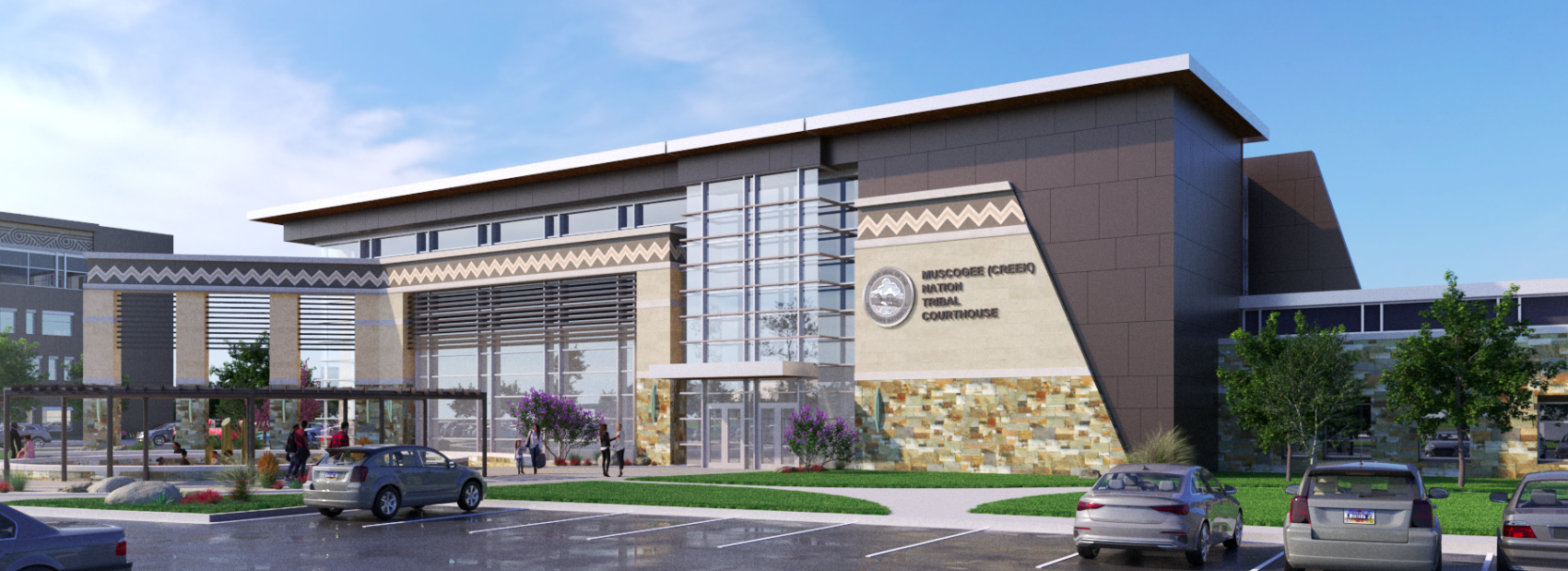
Image of the design of the new Muscogee (Creek) Nation Tribal Courthouse under construction in Okmulgee, Oklahoma. The 43,514 square foot building will feature larger jury courtrooms with room for up to 150 spectators each, multiple additional courtrooms, judges’ offices, inmate holding areas, and ceremonial design elements reflecting Muscogee traditions. Muscogee (Creek) Nation Tribal Courthouse – New Fire Native Design Group

Muscogee (Creek) Nation v. Banks provides an example of Tribal law taking on an independent life after federal law prompts institutional change.

In Banks, the Nation prosecuted an Indian defendant for domestic abuse and moved to exclude non-Indian jurors, arguing that VAWA’s expanded jury protections were unnecessary because the Nation already possessed inherent criminal jurisdiction over him.

The Muscogee Supreme Court rejected that position because Mvskoke law itself required the expanded jury pool. When the National Council amended the Nation’s laws in response to VAWA, it adopted a rule providing defendants charged with domestic, dating, or family violence crimes a jury drawn from a fair cross-section of the community, including non-Indians. The Tribal statute doesn’t distinguish between Indian and non-Indian defendants.

The Court acknowledged that the Nation’s sovereignty and ICRA arguments were “persuasive,” but held that they could not authorize the judiciary to disregard the National Council’s unambiguous statute. If the National Council wants to change the jury formation process it created, the Court made clear, it must do so through legislation; the judiciary won’t rewrite it by interpretation.

That makes Banks more than a VAWA implementation case. Federal law prompted the Nation to redesign its jury system, but Mvskoke law now operates independently of the federal minimum that inspired it. The opinion expressly describes the decision as resting on “traditional and modern Mvskoke law.”

The ruling was interlocutory, and the Supreme Court remanded the case for continued proceedings related to Banks’ prosecution. The opinion was issued on May 29, 2026.

Link to Opinion

Muscogee (Creek) Nation v. Banks, Muscogee (Creek) Nation Supreme Court, May 29, 2026