Here is the order in United States v. Michigan.
Briefs:
Kalae Trask has published “Toward Mutual Recognition: An Investigation of Oral Tradition Evidence in the United States and Canada” in the Washington Journal of Social and Environmental Justice.
The abstract:
United States (“U.S.”) courts have long failed to recognize the value of oral traditional evidence (“OTE”) in the law. Yet, for Indigenous peoples, OTE forms the basis of many of their claims to place, property, and political power. In Canada, courts must examine Indigenous OTE on “equal footing” with other forms of admissible evidence. While legal scholars have suggested applying Canadian precedent to U.S. law regarding OTE, scholarship has generally failed to critically examine the underlying ethos of settler courts as a barrier to OTE admission and usefulness. This essay uses the work of political philosopher, James Tully, to examine OTE not just as evidence, but as an exercise of Indigenous self-determination. By recognizing the inherent political nature of OTE, U.S. courts may expand on Canadian law to build a “just relationship” with Indigenous peoples.
Here are the materials in Eagle Bear Inc. v. Blackfeet Indian Nation (D. Mont.) (No. 22-93):
48 Eagle Bear Response to BIA Motion
50 Eagle Bear Response to Blackfeet
54 Blackfeet Response to Eagle Bear
56 Independence Bank Response to Blackfeet
59 Blackfeet Motion to Dismiss Count 2 of Bank Complaint
62 Blackfeet Response to Independence Bank
65 Blackfeet MSJ re Bank Count 1
68 Eagle Bear Reply in support of 23
70 Independence Bank Response to 59
71 Independence Bank Reply in support of 44
74 Independence Bank Response to 65
79 Blackfeet Reply in support of 65
82 BIA Motion to Dismiss Bank Complaint
84 Independence Bank Response to 82
93 Eagle Bear Motion to Conduct Further Discovery
98 DCT Order Granting Motion for Discovery
100 Eagle Bear Motion for Additional Discovery Time
102 Eagle Reply in support of 100
104 DCT Order Granting More Discovery Time
Prior post here.

High school graduate Lena’ Black, an enrolled member of the Otoe-Missouria Tribe and of Osage descent, filed a lawsuit on May 15, 2023, against the Broken Arrow School District for violating her rights to free exercise of religion and freedom of speech. Black seeks restitution for emotional distress caused when school officials singled her out and attempted to take her sacred eagle plume by force, damaging the plume that she received in ceremony when she was three years old.
“My eagle plume has been part of my cultural and spiritual practices since I was three years old. I wore this plume on graduation day in recognition of my academic achievement and to carry the prayers of my Otoe-Missouria community with me,” said Lena’ Black. “The law protects my right to wear this eagle plume at my graduation, and school officials had no authority to forcibly remove it from my cap.”
Governor J. Kevin Stitt recently vetoed Oklahoma Senate Bill 429, passed by the state legislature with near unanimous bipartisan support to prohibit discriminatory graduation dress codes. The bill would have reaffirmed the rights of Native American students like Black to wear tribal regalia at graduations, a critical protection in the state with the second highest concentration of American Indians. Following his veto, Governor Stitt suggested this issue should instead be resolved at the district level.
Black is represented by the Native American Rights Fund (NARF) and Pipestem Law, P.C. “We will hold the Broken Arrow School District accountable for its discriminatory actions,” said NARF Staff Attorney Morgan Saunders. “The Broken Arrow School District violated Ms. Black’s rights despite existing laws that should have ensured she was able to wear her eagle plume without incident.”
“This lawsuit demonstrates why these decisions cannot be left up to individual school districts,” said Pipestem Law Partner Wilson Pipestem. “Without clarity from the State, Native students will continue to be forced to seek justice in the courts after their rights have been violated and their graduation ceremonies are long since over.”
“I filed this lawsuit to ensure everyone understands the importance of items like my eagle plume, and to prevent schools from targeting Native students like me in the future. No student should face ignorance and discrimination in their school or their community,” said Black.
While traditions vary, members of many tribal nations wear specific clothing or objects, like eagle plumes, at graduation ceremonies to signify their academic achievement and in recognition of their spiritual and religious beliefs. Schools, school district leaders, educators, parents, students, and allies can learn more about creating inclusive graduation ceremonies and positive change at: https://narf.org/cases/graduation/.

Mitchell Forbes has published “Beyond Indian Country: The Sovereign Powers of Alaska Tribes Without Reservations” in the Alaska Law Review. PDF
Here is the abstract:
The Alaska Native Claims Settlement Act of 1971 (ANCSA) devised a land entitlement system markedly different from the Indian reservation system that prevailed in the Lower 48 states. It directed the creation of twelve, for-profit Alaska Native regional corporations and over 200 private, for-profit Alaska Native village corporations, which would receive the bulk of Native land in the state. This corporate model left nearly all tribes in Alaska without a land base. As such, there is very little Indian Country land in the state over which tribes can exercise territorial-based sovereignty. Yet, the Supreme Court has long recognized the power of tribes to exercise membership-based jurisdiction. This Comment analyzes a range of state and federal court decisions addressing the authority of tribes and argues that Alaska tribes, through membership-based jurisdiction, can exercise various sovereign powers, like the exclusion of nonmembers. Importantly, this membership-based jurisdiction does not depend on lands over which tribes can exercise jurisdiction. Therefore, the exclusionary orders imposed by several Alaska Native tribes during the Covid-19 pandemic in 2020 were valid exercises of the tribes’ sovereign powers.

Highly recommended.
Here:
Question presented:
Whether Federal Rule of Civil Procedure 19 requires dismissal of an action challenging a federal agency’s use of water subject to state-adjudicated water rights if a Native American tribe asserts an interest in the suit and does not consent to joinder.
Lower court materials here.
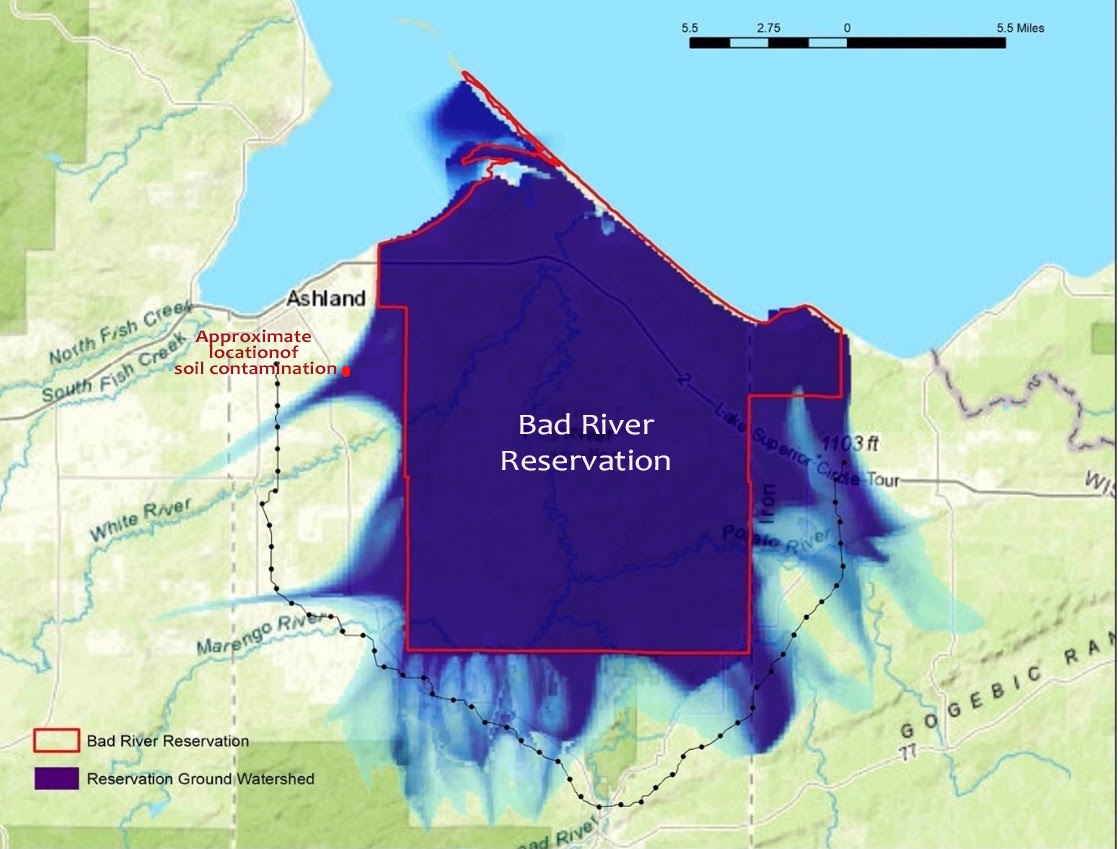
Here are new materials in Bad River Band of Lake Superior Tribe of Chippewa Indians v. Enbridge Energy Co. Inc. (W.D. Wis.):
 Turtle Talk
You must be logged in to post a comment.