Wabanaki Nations Intervene to Defend Maine’s Internet Gaming Law

On April 1, 2026, the four Wabanaki Nations — the Houlton Band of Maliseet Indians, the Mi’kmaq Nation, the Passamaquoddy Tribe, and the Penobscot Nation — represented by the Native American Rights Fund and co-counsel filed an unopposed motion to intervene in Oxford Casino Hotel, et al. v. Champion in the U.S. District Court for the District of Maine. On April 2, 2026, the district court granted the Nations’ motion. The Nations’ intervention ensures their voices are represented in a lawsuit challenging Maine’s new internet gaming law, An Act to Create Economic Opportunity for the Wabanaki Nations Through Internet Gaming, a statute that is important to unique Tribal economic and sovereign interests.

Previous post on this matter is here.

The law, enacted earlier this year, establishes a regulatory framework allowing the Wabanaki Nations to seek licenses to operate internet gaming in Maine. The statute is designed to support Tribal self-determination and create economic opportunities that strengthen the Wabanaki governments and their ability to provide for their communities. The Nations are the direct beneficiaries of the law and have significant sovereign, economic, and constitutional interests at stake in the litigation.

The lawsuit, brought by Oxford Casino Hotel and others, seeks to invalidate the law on constitutional grounds. By granting the Wabanaki Nations’ motion to intervene, the court has allowed the Nations  to participate as party defendants to defend the law and protect their unique sovereign right as governments to pursue economic development in order to fund essential government programs, services and infrastructure.

Leaders of the Wabanaki Nations emphasized the importance of intervening to safeguard economic sovereignty and shared prosperity across Maine.

Chief Francis, Penobscot Nation: “Our intervention in Oxford v. Champion is about the future — for our people and for all of rural Maine. This law gives the Penobscot Nation a fair chance to build jobs, fund essential services, and partner across communities to heal long-standing economic disparities, while recognizing our unique politic status as a Tribal Nation. We look forward to the opportunity to defend this law and our right to economic self-determination.”

Chief Sabattis, Houlton Band of Maliseet: “This law is crucial to advancing the Houlton Band’s efforts to develop independent, long-term revenue sources that are not dependent on federal funding and will enable us to support and expand governmental services for Maliseet families and other community members. It is a result of collaboration between the Wabanaki Nations and state government under our unique jurisdictional relationship to create opportunities that will enable the Nations to share in the economic benefits of gaming.”

Chief McCormack, Mi’kmaq Nation: “Rural Maine and our Nations are interconnected. When Tribal economies grow, local businesses, workers, and towns grow too. The Mi’kmaq Nation is proud to stand in court with the other Wabanaki Nations to defend a law that makes that shared prosperity possible.”

Chief Bassett, Passamaquoddy Tribe (Pleasant Point): “The Wabanaki Nations face steeper barriers to prosperity than other Tribes around the country, and we have been historically blocked out of Maine’s casino gaming industry as our peers across Indian country rebuilt their economies and the economies around them using those same economic tools we were deprived of. Defending this law is defending our right to pursue self-determination. We are fighting for a brighter economic future for our future generations.”

Chief Nicholas, Passamaquoddy Tribe (Indian Township): “The Passamaquoddy Tribe has been steadfast in its support of economic sovereignty as its number one priority the past two years in the Maine legislature. We are ready to stand in court to defend a law we were proud to fight for over the past years in the state house. Maine’s new internet gaming law is intended to promote a better economic future for Wabanaki communities and for rural Maine. By protecting this law, we protect our future.”

Native American Rights Fund Staff Attorney Lenny Powell: “The Native American Rights Fund is proud to jointly represent the Wabanaki Nations in efforts to defend ‘An Act to Create Economic Opportunity for the Wabanaki Nations Through Internet Gaming.’ This attack represents an unfortunate effort to undermine Tribal-state partnerships. It seeks to undermine the legal basis for constructive government-to-government policy collaboration, despite decades of data showing that Tribal and non-Tribal communities alike are stronger when Tribal nations are empowered in their pursuit of self-determination.”
Protections continue for Baaj Nwaavjo I’tah Kukveni – Ancestral Footprints of the Grand Canyon National Monument

On April 1, 2026, the Ninth Circuit Court of Appeals threw out the Arizona Legislature’s challenge to Baaj Nwaavjo I’tah Kukveni-Ancestral Footprints of the Grand Canyon National Monument. The decision leaves the monument in place and fully protected. You can see the decision here:

In September of 2024, the District Court denied, without prejudice, the Tribes’ motion to intervene in this case, finding the United States adequately represented the Tribes’ interests at that time. Here is that order:

The Ninth Circuit’s April 1 decision affirms the District Court decision dismissing the two consolidated cases filed against the Monument designation.

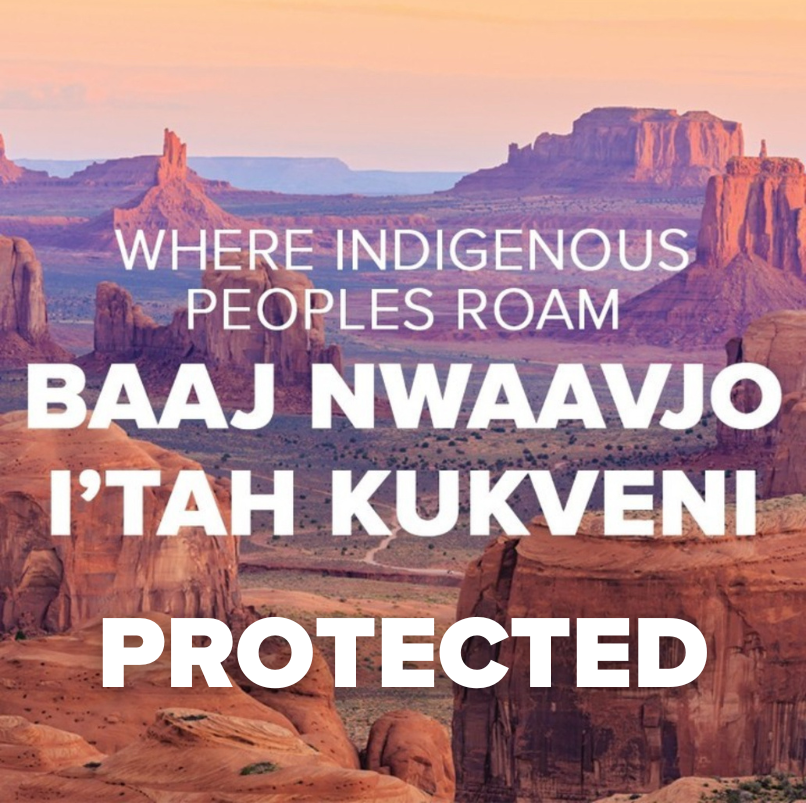
The National Monument protects thousands of historic and scientific objects, sacred places, vital water sources, and the ancestral homelands of many Indigenous Peoples. Baaj Nwaavjo I’tah Kukveni lands include cultural and sacred places of the Havasupai Tribe, Hopi Tribe, Hualapai Tribe, Kaibab Band of Paiute Indians, Las Vegas Paiute Tribe, Moapa Band of Paiutes, Paiute Indian Tribe of Utah, Navajo Nation, San Juan Southern Paiute Tribe, Yavapai-Apache Nation, Pueblo of Zuni, and the Colorado River Indian Tribes. The Monument receives its name from the Indigenous names given to the area by the Havasupai and Hopi. Baaj nwaavjo (BAAHJ – NUH-WAAHV-JOH) means “where Indigenous peoples roam” in the Havasupai language, and i’tah kukveni (EE-TAH – KOOK-VENNY) means “our ancestral footprints” in the Hopi language.

Learn More: Arizona Legislature v. Biden

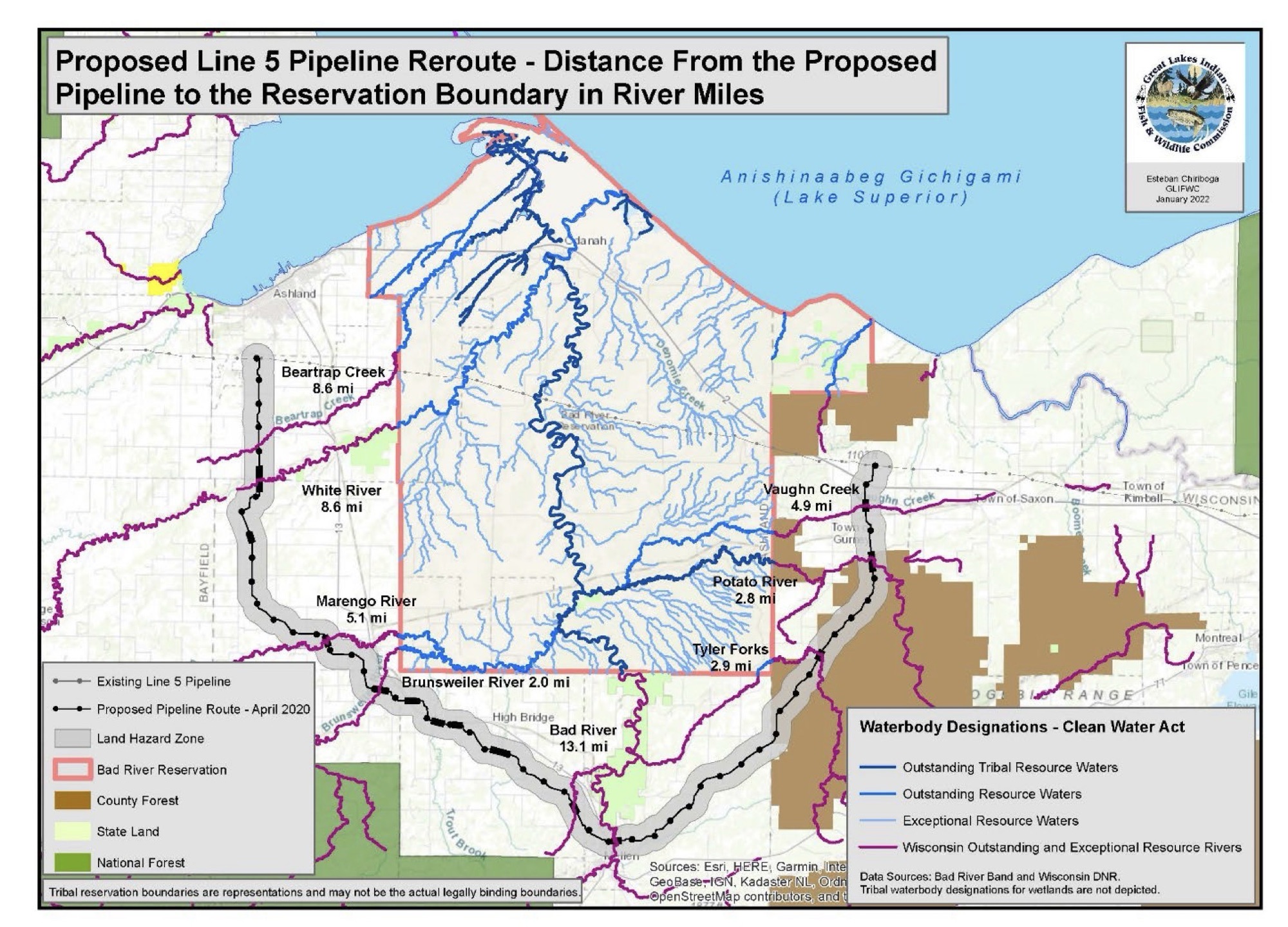
Bar River Ojibwe Sues Army Corps over Enbridge Line 5 Reroute

Here is the complaint in Bad River Band of Lake Superior of Chippewa v. United States Army Corps of Engineers (D.D.C.):

Oklahoma Federal Court Dismisses Tulsa Detention Officer’s ICRA Habeas Petition after Creek Nation Drops Criminal Charges

Here are the materials in Douglas v. Wisner (E.D. Okla.):

4 Habeas Petition

21 Motion to Dismiss

25 Opposition

29 Reply

34 Magistrate Report

39 Objections

42 Response

43 Unopposed Motion to Dismiss

43-1 Exhibit Request & Order of Dismissal of Charges

44 DCT Order

SCOTUS Denies Cert in Stroble v. Oklahoma Tax Commission

Here is today’s order list.

Cert stage materials here, here, and here.

Washington Federal Court Declines to Intervene in State Court Dispute Involving Frank’s Landing

Here are the materials in Frank’s Landing Indian Community v. Enlow (W.D. Wash.):

New Scholarship on Electrifying the Navajo Nation

Carington Lowe & Michael Hamersky have published “The Tribal Energy Act: A Necessary Step Toward the Electrification of the Navajo Nation” in the Pepperdine Law Review.

Here is the abstract:

The Navajo Nation stands as a sovereign nation, yet many families still lack access to electricity because of enduring historical, structural, and regulatory barriers. This Article identifies the legal and technical barriers that have hindered meaningful progress and argues that supplementing the utility grid with distributed energy resources, such as biodigesters, offers a viable path toward electrification, particularly for remote and rural communities within the Navajo Nation. Biodigesters convert organic waste generated through community practices, such as sheep raising, into biogas through an anaerobic process. This form of energy reflects circular economy principles while also aligning with Diné cultural practices of environmental harmony and stewardship. As a flexible and scalable energy source, biodigesters can be adapted to meet the diverse needs of these communities. 

With these barriers in mind, this Article examines the Tribal Energy Act and the authority it grants the Navajo Nation to implement new regulations to encourage clean electrification. It further proposes targeted revisions to existing regulatory frameworks to facilitate the wider adoption of distributed energy resources and promote greater energy access across the reservation.

Jordan Gross on White Collar Crime in Indian Country

Jordan Gross has published “White-Collar Crime in Indian Country: Teaching and Researching Familiar Issues in a Unique Context” in the Stetson Law Review.

Here is the abstract:

Some locations within Indian Country make up the most dangerous places in the United States. Remoteness, extreme poverty, and complex federal jurisdictional rules, combined with a paucity of law enforcement resources, have given some Indian reservations reputations as safe havens for lawlessness and organized crime. Crime in Indian Country is often associated with violent offenses, drug running, and human trafficking. Indian Country faces a less well known, but equally pernicious threat from white-collar crime. The federal government directs billions of dollars to Indian Country every year to fund Tribal projects, grants, and contracts. Indian Tribes operate and have interests in many highly profitable gaming operations and resource extraction industries. The vast sums of money flowing through these businesses are an attractive target for fraudsters and opportunists. And the same circumstances that contribute to high rates of violent crime in some parts of Indian Country create fertile conditions for white-collar crime, particularly federal program fraud, embezzlement, public corruption, money laundering, and tax evasion. These crimes cause more than pecuniary losses in Indian Country: monies lost to fraud and corruption in this context are often earmarked for public services and desperately needed infrastructure for residents of Indian Country, thus undermining the ability of Tribal governments to address acute needs in some of the most underserved and poverty-stricken communities in the United States. The jurisdictional and legal contexts in which crime in Indian Country is investigated and prosecuted in the United States are sui generis and unstable. Yet criminal justice issues as they impact residents of Indian Country as well as the self-determination and sovereignty interests of Tribes are overlooked and underexamined in legal education and discourse. This is especially true of white-collar crime in Indian Country, a topic that receives virtually no attention in legal scholarly publications and textbooks. This Article is directed at this void in the academic and pedagogical literature. Its goal is to provide white-collar crime teachers and researchers with background, resources, and encouragement to add Indian Country issues and topics to their repertoire.

New York Federal Court Holds IHS Must Accept PL638 Contract re: Water and Sanitation

Here are the materials in St. Regis Mohawk Tribe v. United States (N.D. N.Y.):

25-1 Tribe Motion for Summary J

29-1 Federal Cross Motion

30 Tribe Reply

32 Federal Reply

35 DCT Order

California Federal Court Dismisses FTCA Claim against BIA Officials for Interfering with Attorney Contract [Miwok leadership dispute]

Here are the materials in Corrales v. United States (S.D. Cal.):